
Guía de cómo recalentar la paella

Freshly cooked food is the best, no one can argue with that, but sometimes we end up cooking too much, or perhaps we fill up on appetisers and have some food left over. To avoid throwing it away and wasting food, we keep it as leftovers for the next day.
Paella is a dish that is much more enjoyable when it is freshly cooked, but that does not mean the leftovers cannot be just as good. In this blog post, we share some tips for reheating your paella so you can enjoy it as if you had cooked it that same day.
Can paella be reheated without losing flavour or texture?
Of course it can! But we need to do it properly; otherwise, we will end up with dry rice, overcooked rice, or rice that has even lost part of its flavour..jpg)
Why does rice change when it cools down?
The change in flavour and condition of rice when it cools in the fridge is due to a natural process called starch retrogradation.
When we cook rice, the starch it contains absorbs water and swells. This is why the rice becomes tender, juicy and loose. But when it cools, the starch molecules reorganise, expelling part of the water they originally absorbed and becoming more compact and “crystalline”.
As a result of this process, the rice becomes harder, develops a dry texture due to the partial loss of liquid and, therefore, loses some of its original juiciness. Luckily, we can still recover much of its original flavour and texture if we reheat it correctly.
How long does paella last in the fridge before reheating?
It is recommended that we keep our paella leftovers in the fridge for a maximum of 24 hours, although an acceptable limit of 48 hours is still possible, provided it has been stored correctly. This is because rice is a delicate food which, if not stored properly, can develop unwanted bacteria.
How to reheat paella in a frying pan: our recommended method
Why reheating rice in a frying pan is the best option
It is the best option for reheating our paella, as it allows us to recreate the original cooking of the rice without needing to get out our paella pan. This is because it lets us reproduce progressive and controlled heat; the base of the frying pan heats up in a similar way to a paella pan, and the rice does not “boil” again, but rather reactivates.
Step by step: reheating in a frying pan is the best option
-Take the paella out of the fridge a few minutes before heating it.
-Add a few drops of water or stock; if you have some left over, a few small spoonfuls of either, or both, over the area you are going to reheat is also an option.
-Cover it with a lid or with aluminium foil.
-Heat it over a medium-low heat for a few minutes, uncover, check and taste whenever necessary until it reaches the point you want.
-It is advisable to uncover it during the last 1–2 minutes if you want to recover some of the base.
Tip for recovering the socarrat when reheating
Reheating our paella in a frying pan has the added benefit of allowing us to recover our socarrat.
To do this, try to avoid stirring the rice too much and, during the last 2–4 minutes, let the rice heat over a medium heat. If you have added enough stock or water, after the reheating process you will be able to hear the characteristic crackling or sizzling, an indication that we are getting our socarrat.
Make sure you listen and smell carefully. If at any point it starts to smell burnt rather than toasted, remove the pan from the heat, as you would be accidentally burning the base of your rice.
How to heat paella in the oven
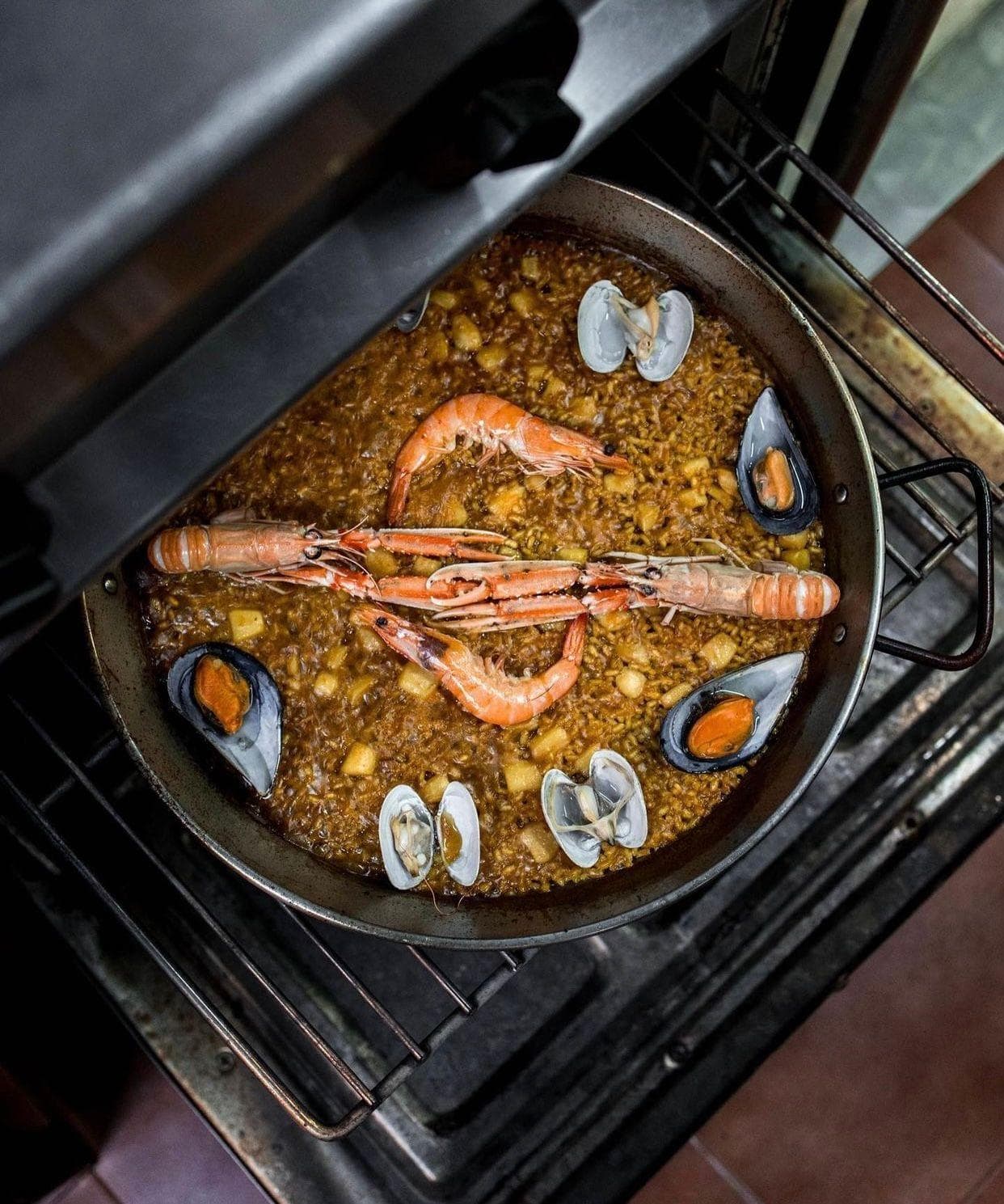
Perhaps it is a slightly more unusual method, but no less effective. If we are cooking another dish in the oven, it can be a good way to make the most of the moment without turning on the hob.
Ideal temperature and time for reheating in the oven
We recommend a temperature of 150–160°C, as we want a gentle heat that does not dry out our rice.
Add 2–4 tablespoons of stock or water, spread around the container.
Cover with aluminium foil or an oven-safe lid; this will keep the steam inside, helping the rice stay juicier.
Heat for 10–15 minutes, depending on the amount of rice you are reheating. Optionally, you can remove the foil or lid during the last 2–3 minutes; this will dry the surface slightly without losing flavour.
How to prevent rice from drying out in the oven
Remember to add enough stock or water and avoid a high temperature. Also, do not leave the rice heating for too long, or it may also lose its texture.
Heating paella in the microwave: when it is acceptable and how to do it well
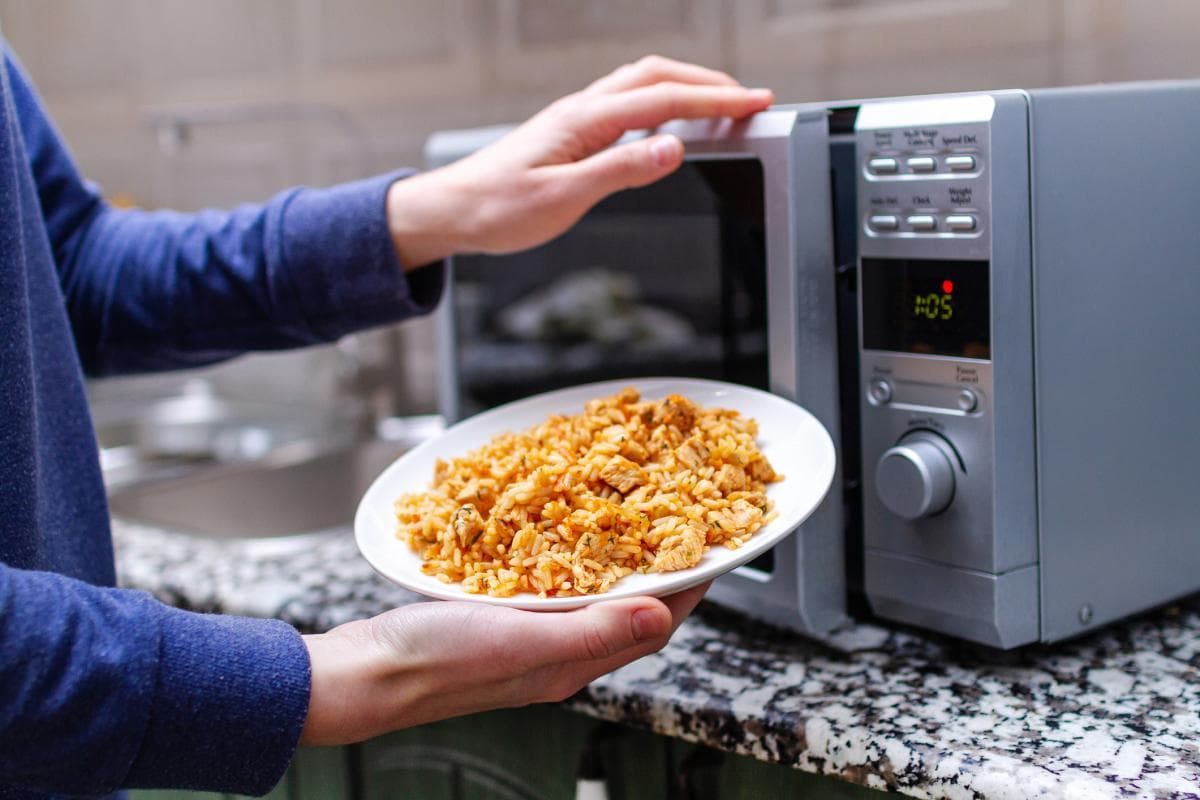
More than one of us has reheated rice in the microwave, perhaps even a plate of paella bought from a food shop that we simply want to warm up a little.
Using a microwave to reheat our paella is an acceptable method when we are in a hurry, when dealing with individual portions, if the paella has already been stored properly, cooked less than 24 hours ago or kept in our fridge, or for rice dishes where we already have socarrat or do not mind not being able to create more during reheating.
We should avoid this method if we want a perfect texture, if the paella is freshly made or of high quality, if we want to recover the socarrat, or for large quantities, as it will not heat all the rice properly.
The main problem with microwaving rice
Reheating paella in the microwave can get us out of a tight spot, but it is also one of the methods that can most affect the texture of the rice if not done correctly. These are the most common problems:
- Uneven heating: some areas of the rice may remain cold or not hot enough if the heat is not distributed well during the process.
- Rubbery or soft rice: too much moisture can make the grain lose firmness and leave it with an unpleasant texture.
- Loss of texture at the base: as it does not receive direct heat from below, the base of the rice does not recover the texture it would have when heated in a frying pan or paella pan.
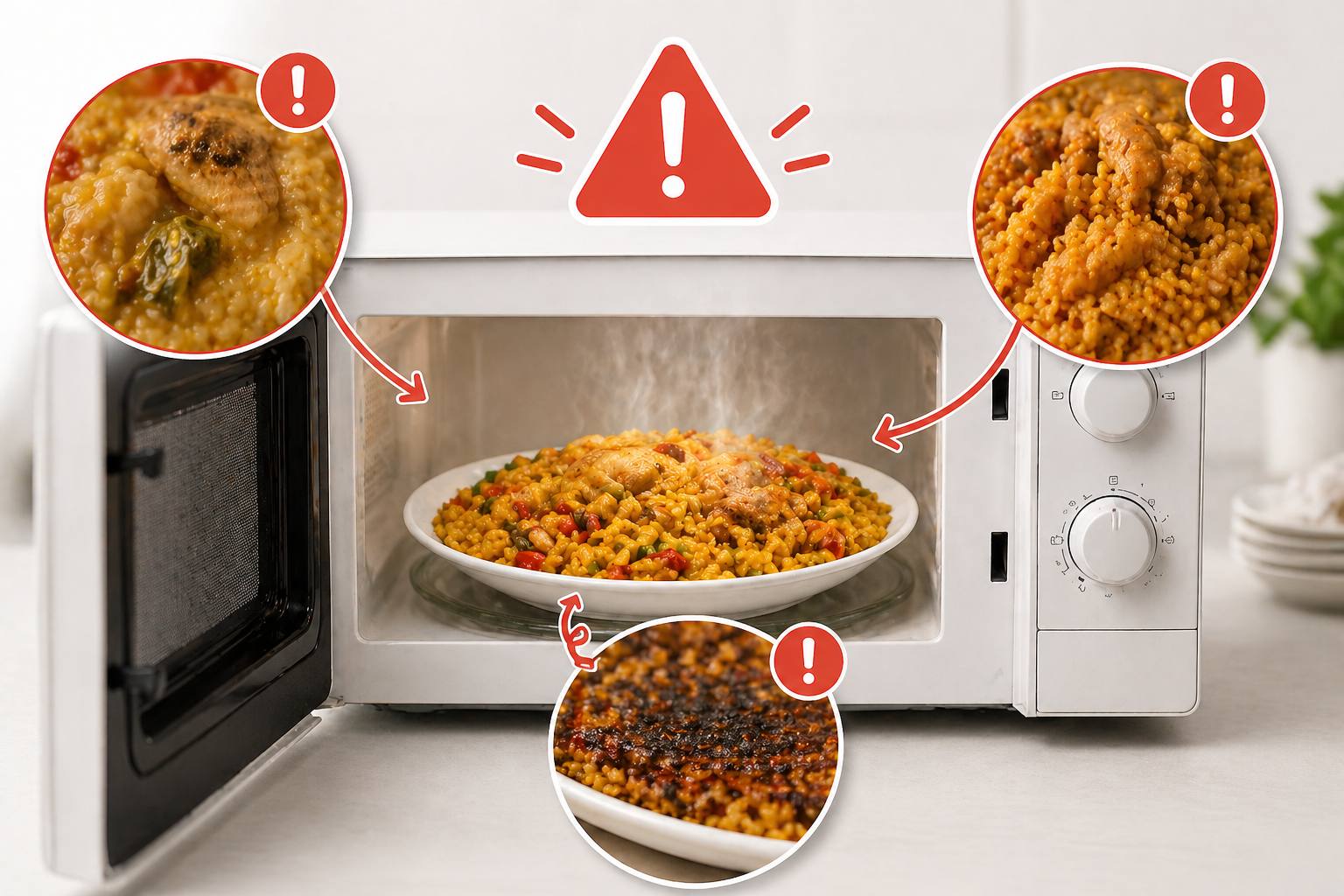
How to heat paella in the microwave without ruining it
The microwave is the quickest and most convenient method for reheating paella, although it is worth remembering that part of the rice’s original texture will be sacrificed. To get a better result, the ideal approach is to do it carefully and in short bursts.
- Separate the portion you are going to eat: place the paella on a flat, shallow plate or container so that the heat is distributed more evenly.
- Add a little moisture: add 1 or 2 small spoonfuls of water or stock. You can also place a damp cloth next to the plate to prevent the rice from drying out.
- Cover the container: use a microwave-safe lid or suitable cling film, leaving a small opening for the steam to escape.
- Heat in short bursts: do it in intervals of about 1 minute, checking the result between each round. In general, 2 to 3 minutes is usually enough.
The most common mistakes when reheating paella
To better preserve the flavour and texture of the rice, avoid these common mistakes:
- Using too much power: it can dry out and harden the grain, especially in the final minutes.
- Stirring too much: it can break the rice and leave it with a pastier texture.
- Reheating the whole paella: it is best to heat only the amount you are going to eat.
- Adding too much liquid: too much water or stock can make the rice lose texture.
- Heating more than necessary: it can make the rice clump together and turn dry or rubbery.
Can paella be reheated more than once?
Although it is technically possible, it is not advisable to reheat paella more than once. Rice is a delicate food and, if handled or stored incorrectly, it can encourage the growth of bacteria such as Bacillus cereus.
In addition, reheating several times causes a noticeable loss of quality: the rice loses moisture, the starch structure breaks down and the texture can become dry, pasty or rubbery. For this reason, the safest and most practical option is to reheat only the portion you are going to eat.
What to do with leftover paella if you are not going to reheat it?
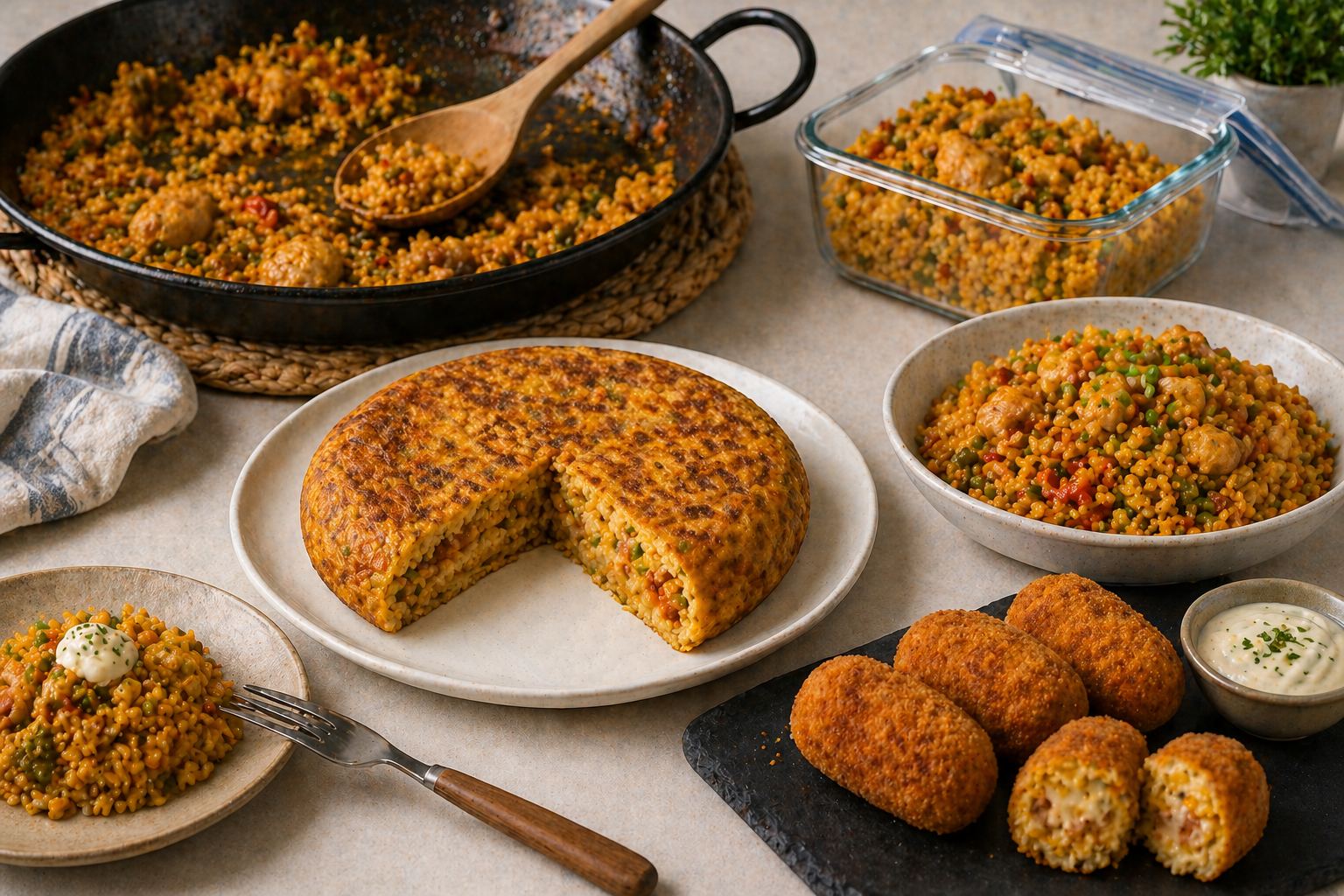
If you have more paella left over than you can eat, you do not need to waste it. Leftover rice can be used in other simple and tasty dishes, such as a rice omelette, fried rice or even stuffed croquettes.
This way, you can give leftover paella a second life without having to reheat it again, while maintaining a more pleasant experience in terms of texture and flavour.