
How to make a wood-fired paella
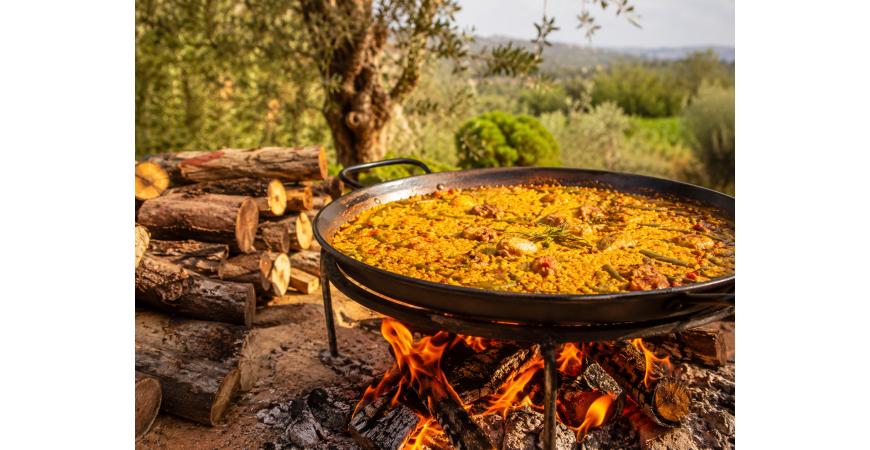
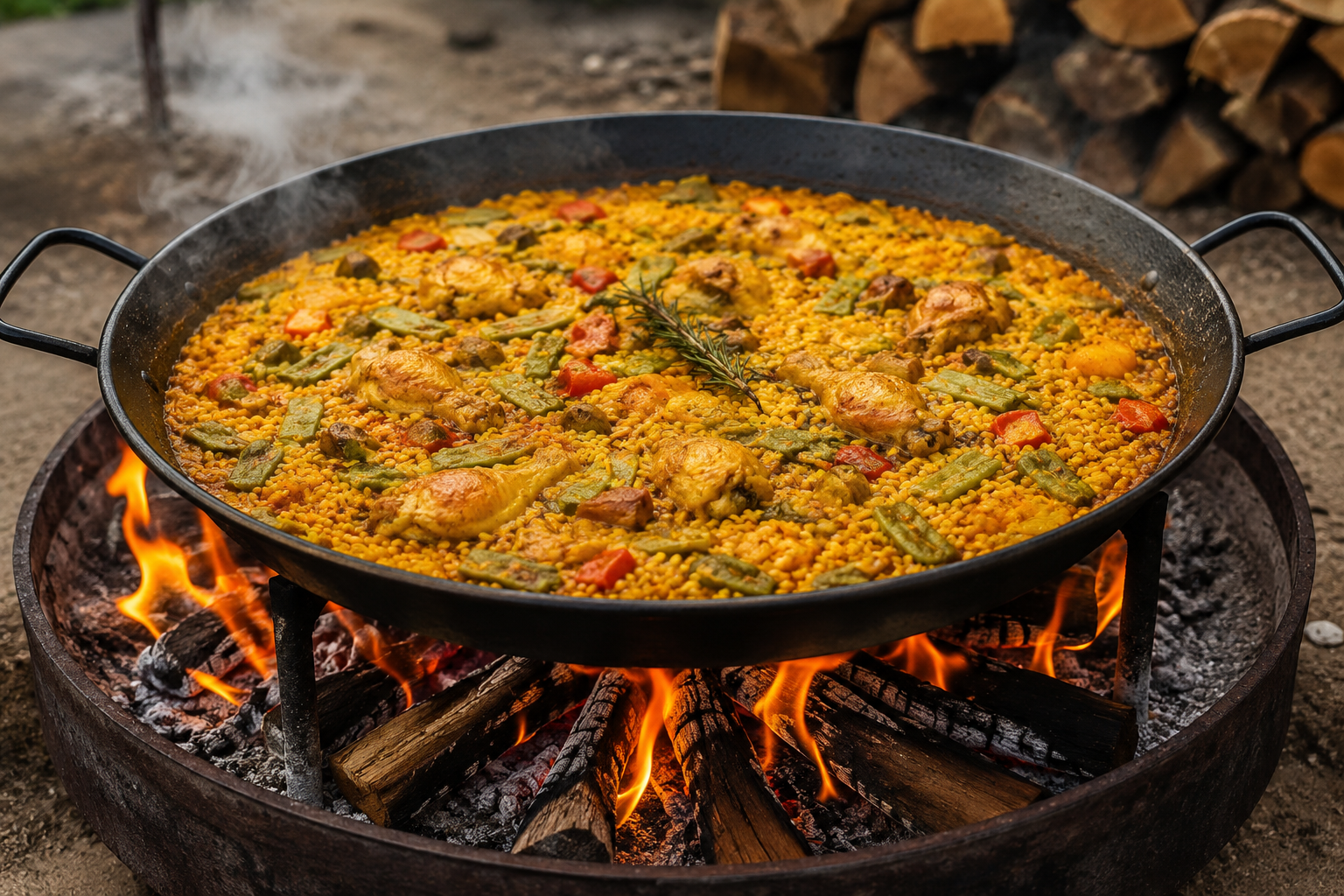
Wood-fired paella is one of the most traditional, authentic and flavourful ways to prepare a good paella. Cooking over a wood fire gives it a special aroma, a different intensity in the sofrito and a cooking experience closely linked to Mediterranean culture.
Unlike gas cooking, where the heat can be adjusted quickly and precisely, cooking a wood-fired paella requires more attention and technique. You need to know how to control the flame, choose the right wood, maintain proper evaporation and adapt the intensity of the fire to each stage of the recipe.
In this guide, we explain how to make a wood-fired paella step by step, what type of wood for paella to use, which rice for paella to choose, how to control the stock for paella and which mistakes to avoid in order to achieve a tasty paella, with loose rice and a good socarrat.
Wood-fired paella: differences, ingredients and cooking technique
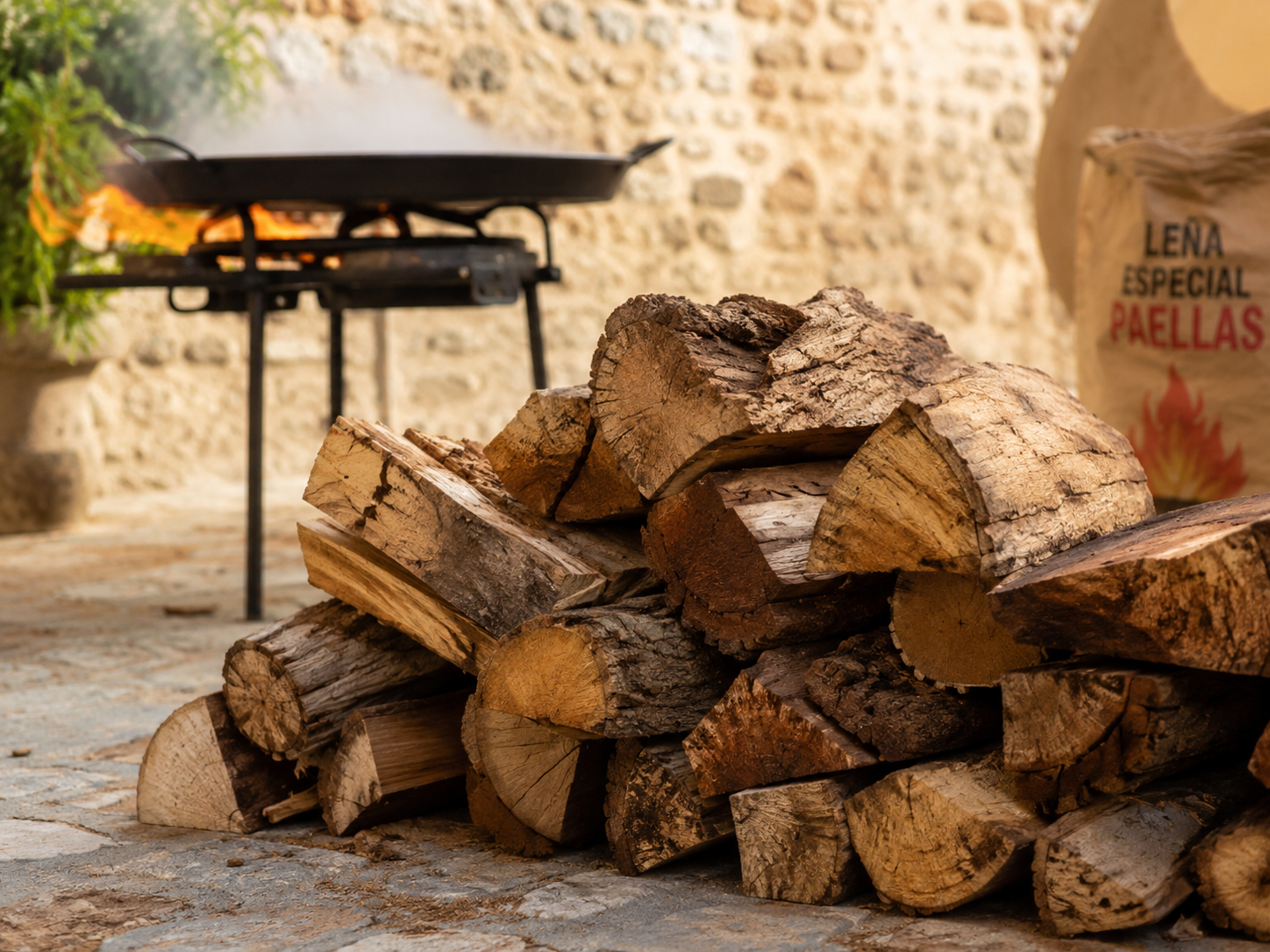
Wood-fired paella is not just a different way of cooking; it is a technique that directly influences the flavour, texture and final result of the rice. A wood fire provides very characteristic heat, especially useful for browning ingredients, concentrating the sofrito and achieving intense cooking.
In addition, cooking with wood turns the preparation of paella into a more visual and traditional experience. The sound of the fire, the aroma of the wood and the manual control of the flame are all part of the charm of this way of cooking.
However, it is also a more demanding technique. The fire can rise or fall quickly, the stock can evaporate more and the rice needs constant attention so it does not turn out hard, overcooked or burnt.
What is the difference between a wood-fired paella and a gas-cooked paella?
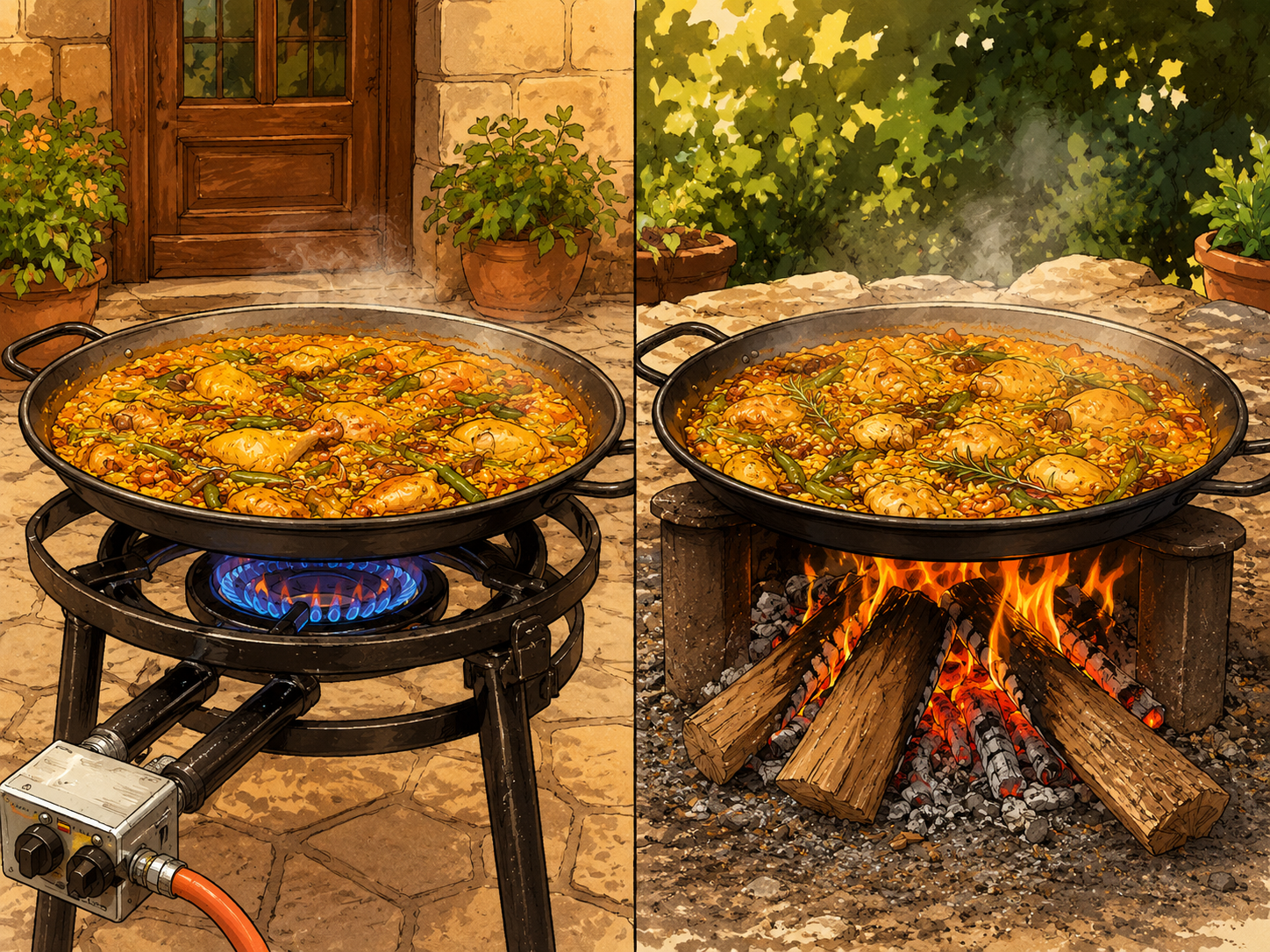
The main difference between a wood-fired paella and a gas-cooked paella lies in the flavour and in the control of the heat.
A gas-cooked paella allows the intensity to be regulated more easily. With a good gas paella burner, you can increase or reduce the power in seconds, making it easier to maintain even cooking. It is a very practical, clean and convenient option, especially for those who cook paella frequently or want greater precision.
Wood-fired paella, on the other hand, provides a more traditional aroma and a slightly smoky flavour that is very difficult to achieve with other systems. The heat from the wood is lively, powerful and changing, which can improve the sofrito, intensify the flavour of the base and help achieve a more pronounced socarrat.
That said, cooking with wood requires more experience. It is not regulated with a knob, but by adding, removing or moving the wood. That is why it is important to control the flame at all times and adapt the fire to each stage of the recipe.
Ingredients and key elements for making a wood-fired paella
To prepare a good wood-fired paella, choosing good ingredients is not enough. It is also essential to use suitable wood, quality rice, the right stock ratio and a paella pan of the appropriate size.
Wood-fired cooking greatly enhances flavours, so it is best to work with balanced ingredients and avoid overloading the paella. A good sofrito, a tasty base and well-cooked rice are more important than adding too many elements.
In a wood-fired paella, every decision affects the result: the type of wood, the intensity of the fire, the amount of liquid and the moment when the rice is added.
What type of wood should be used to make paella?
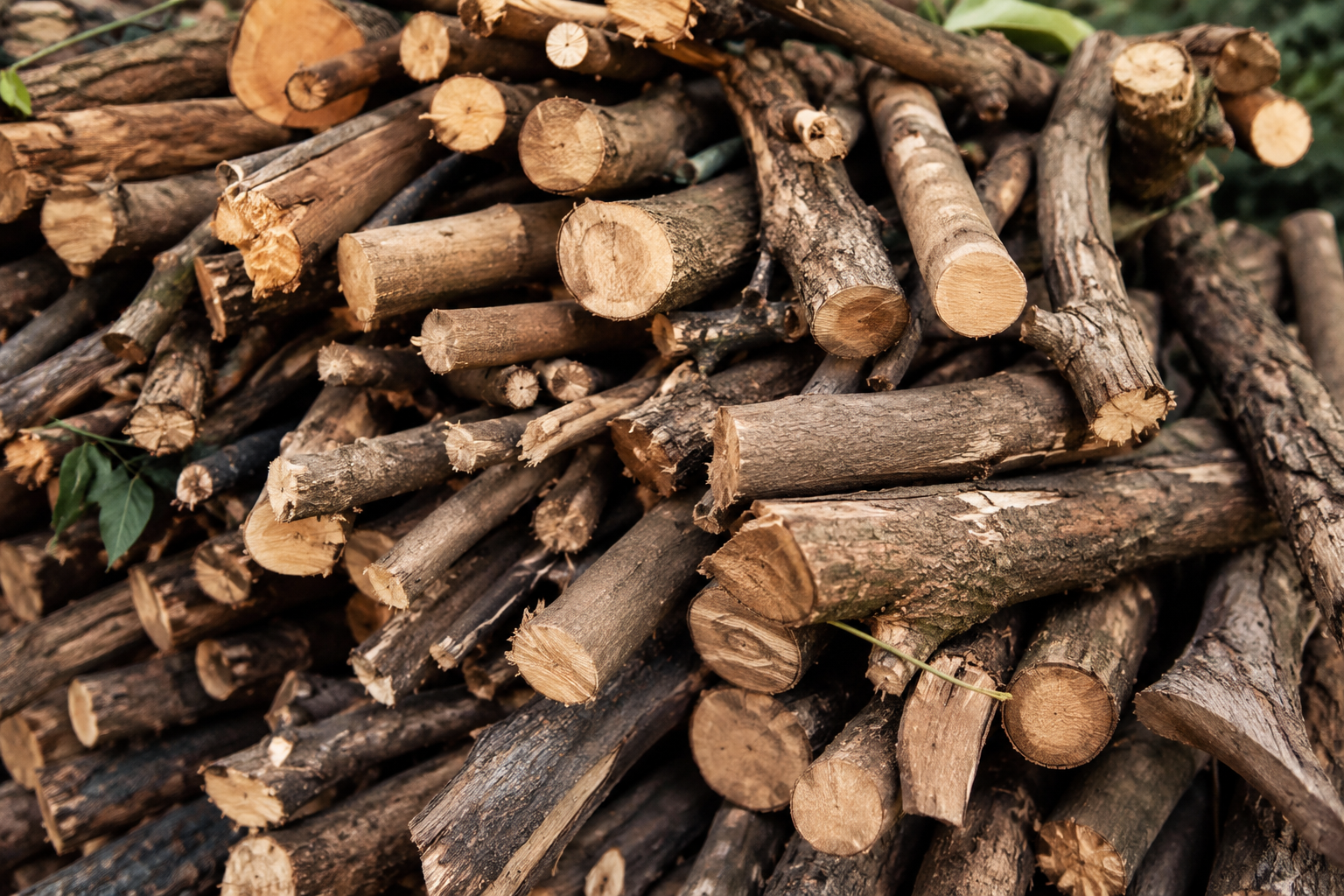
The best wood for making paella is dry, clean wood suitable for cooking. One of the most traditional options is orange wood, widely used in the Valencian Community for its pleasant aroma, good combustion and ability to generate a lively flame.
Other hardwoods such as holm oak, olive or almond wood can also be used. These woods generate good embers and maintain heat for longer, although they can burn more intensely and require greater control.
Ideally, you should combine thin branches with thicker pieces of wood. Thin branches help light the fire and increase the intensity quickly, while medium logs help maintain more stable cooking.
Treated, painted or varnished wood, furniture scraps, industrial pallets or construction wood should not be used, as they may release substances that are not suitable for cooking. Damp wood or green wood should also be avoided, because it produces a lot of smoke, lights poorly and makes it harder to control the paella.
What rice should be used to cook a wood-fired paella?

To cook a wood-fired paella, the most recommended option is to use quality short-grain rice. The most suitable varieties are bomba rice, sénia rice and albufera rice, as they absorb the flavour of the stock well and offer an ideal texture for paellas.
Bomba rice is a very safe option for cooking with wood, because it withstands overcooking better and helps prevent the grain from becoming overdone too easily. This is especially useful when the fire is not as precise as a gas paella burner.
Sénia rice and albufera rice have a great ability to absorb flavour, which gives a very tasty result. However, they require better control of cooking times and the amount of stock, as they are more delicate varieties.
Once the rice has been added to the paella pan, it is important to spread it out well and not stir it again. This helps achieve more even cooking, looser grains and better socarrat formation.
Stock or water: how to control evaporation when cooking with wood
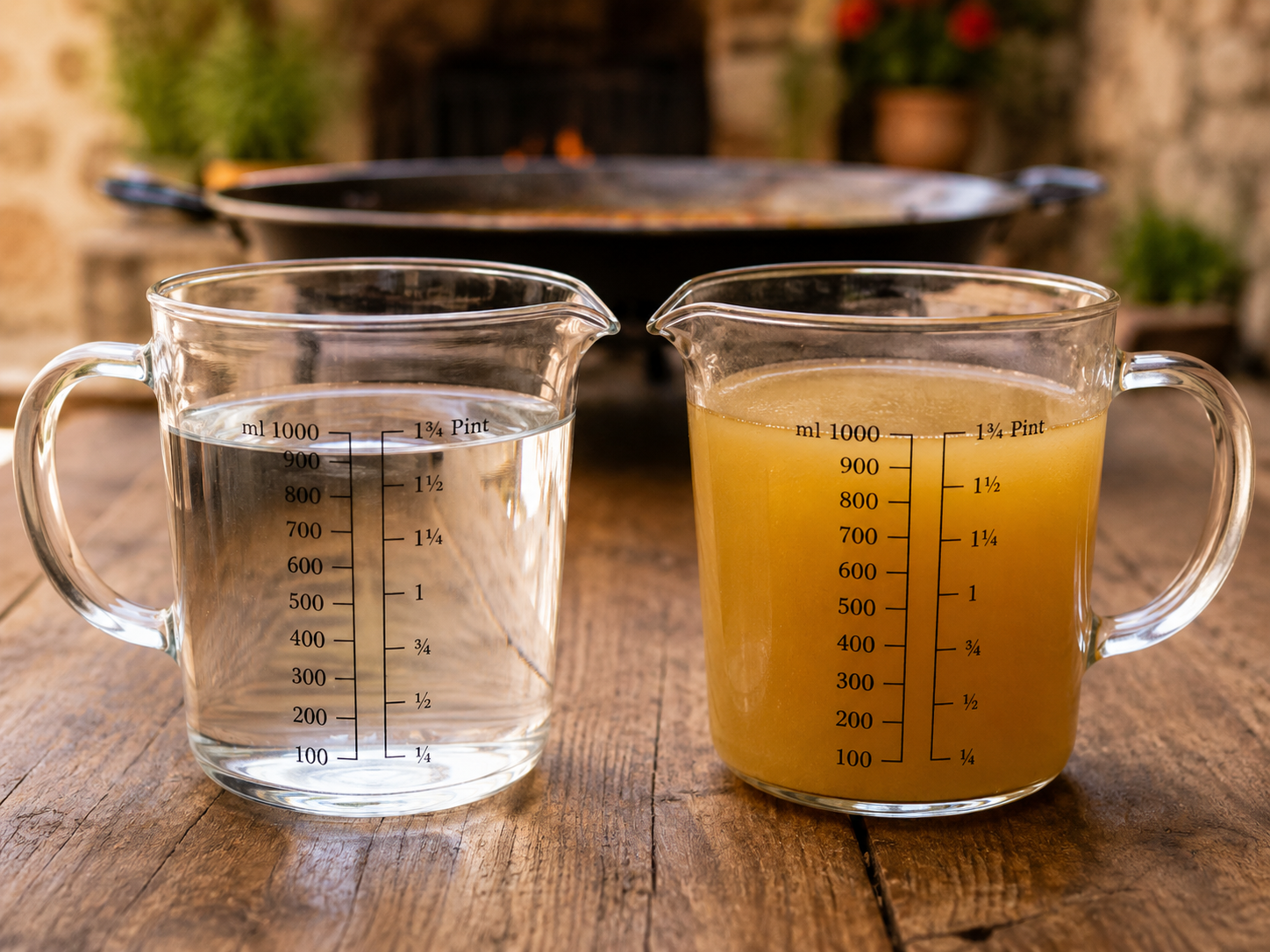
Controlling evaporation is one of the most important points when making a wood-fired paella. A wood fire can reach a high intensity and cause the stock to evaporate faster than expected.
If you are preparing a traditional Valencian paella, it is usually cooked with water, as the flavour comes from the sofrito, the meat, the vegetables and the joint cooking process. In other recipes, such as seafood paellas, mixed paellas or meat paellas, stock or fumet can be used to add more intensity.
As a general reference, when cooking with wood you can use an approximate ratio of 3 parts stock or water to 1 part rice. This ratio may vary depending on the type of rice, the diameter of the paella pan, the strength of the fire and the cooking time.
During the first few minutes after adding the rice, it is advisable to keep a lively fire so the stock boils strongly. Then the intensity should be reduced so the rice cooks evenly. In the final minutes, the fire can be slightly increased to achieve the socarrat, always making sure it does not burn.
Essential spices and seasonings for a wood-fired paella
The basic seasonings for a good wood-fired paella are saffron, sweet paprika, salt and, depending on the recipe, an aromatic herb such as rosemary.
Saffron provides colour, aroma and a very characteristic flavour. It can be infused in the stock or added directly during cooking so it is distributed evenly.
Sweet paprika should be used carefully. Ideally, it should be added after the sofrito and stirred briefly, preventing it from burning, as if it is cooked for too long it can give a bitter flavour.
The salt should be adjusted before adding the rice. The stock should be slightly tasty, because the rice will absorb part of the flavour during cooking.
Rosemary can provide a very pleasant Mediterranean touch, especially in meat paellas. However, it should be used in moderation and removed after a few minutes so it does not dominate the final flavour.
Utensils needed to cook a wood-fired paella
To cook a wood-fired paella safely and achieve a good result, it is important to use the right utensils. The most important is the paella pan, which must have the correct diameter according to the number of diners.
A paella pan that is too small will make the layer of rice too thick, making evaporation and even cooking more difficult. A paella pan that is too large, on the other hand, may cause the stock to evaporate too quickly if the fire is not well controlled.
It is also necessary to have a stable support for cooking over wood, as well as accessories that make handling the fire easier and ensure safety throughout the process.
Paella pan, wood-fire support and recommended accessories
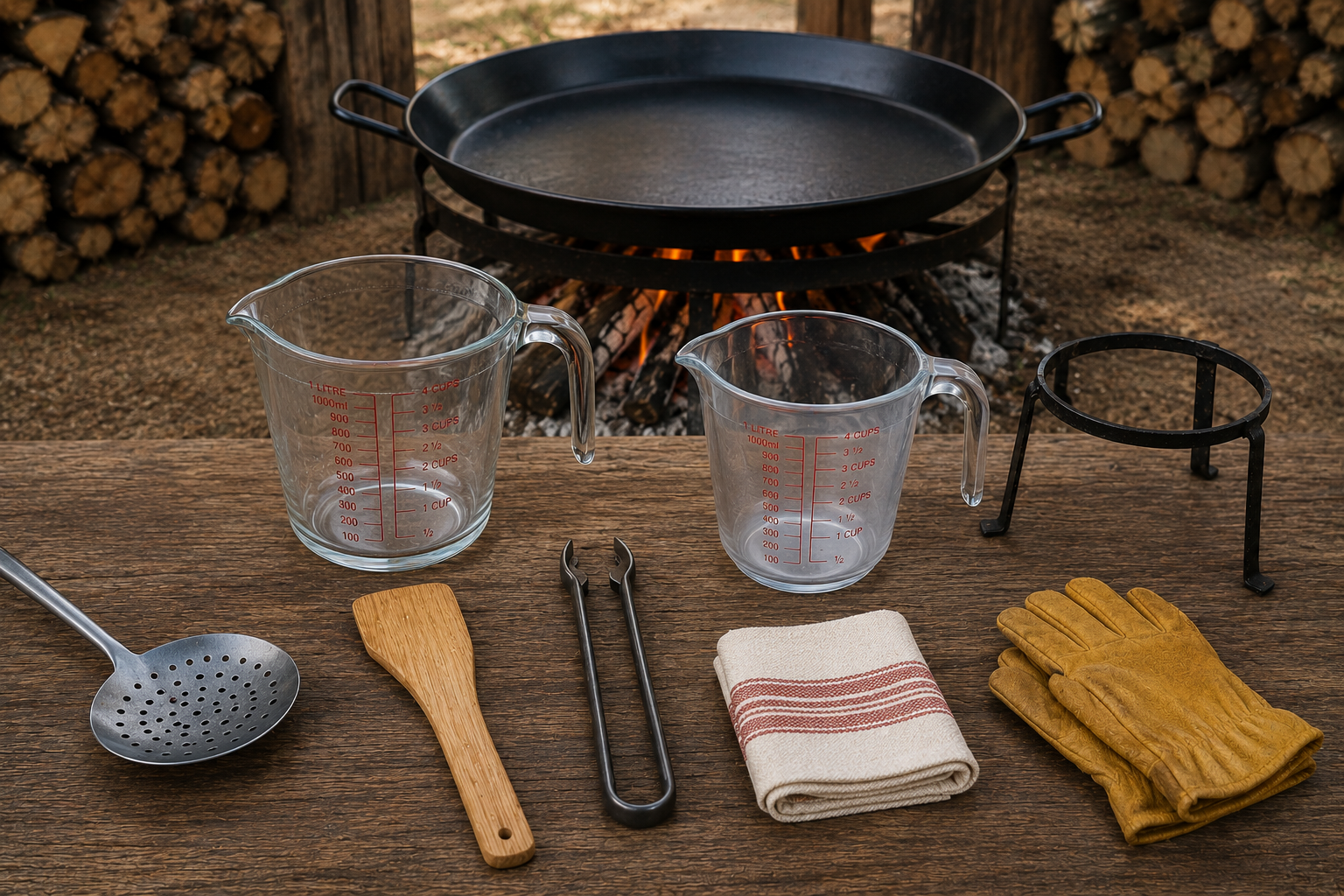
The paella pan must be properly levelled before you start cooking. If it is tilted, the stock will accumulate in one area and the rice will cook unevenly. That is why it is advisable to use a leveller or visually check that the paella pan is straight.
To cook with wood, you can use a tripod, a metal structure or a specific support for wood-fired paellas. The important thing is that it is strong, stable and allows the paella pan to be placed at a suitable height over the fire.
It is also useful to have a spatula or rice paddle, heat-resistant gloves, tongs for moving the wood and a container with water or sand for safety.
Although the gas paella burner is not used in a wood-fired paella, it can be a practical alternative when greater control of the heat is desired. However, when cooking with wood, the essential thing is to have a safe, ventilated space prepared for working with embers.
How to make a wood-fired paella step by step
Making a wood-fired paella step by step requires planning and attention. Before lighting the fire, all the ingredients must be prepared, the paella pan levelled and the wood arranged by size.
Once the wood is lit, the cooking process moves quickly. First, a lively fire is used to heat the oil and brown the main ingredients. Then the sofrito is prepared, the water or stock is added and it is left to boil to concentrate the flavour.
When the stock is ready, the rice is added, spread evenly and cooked without stirring. Controlling the fire during this stage will be decisive for achieving a well-made paella.
Preparation before lighting the fire
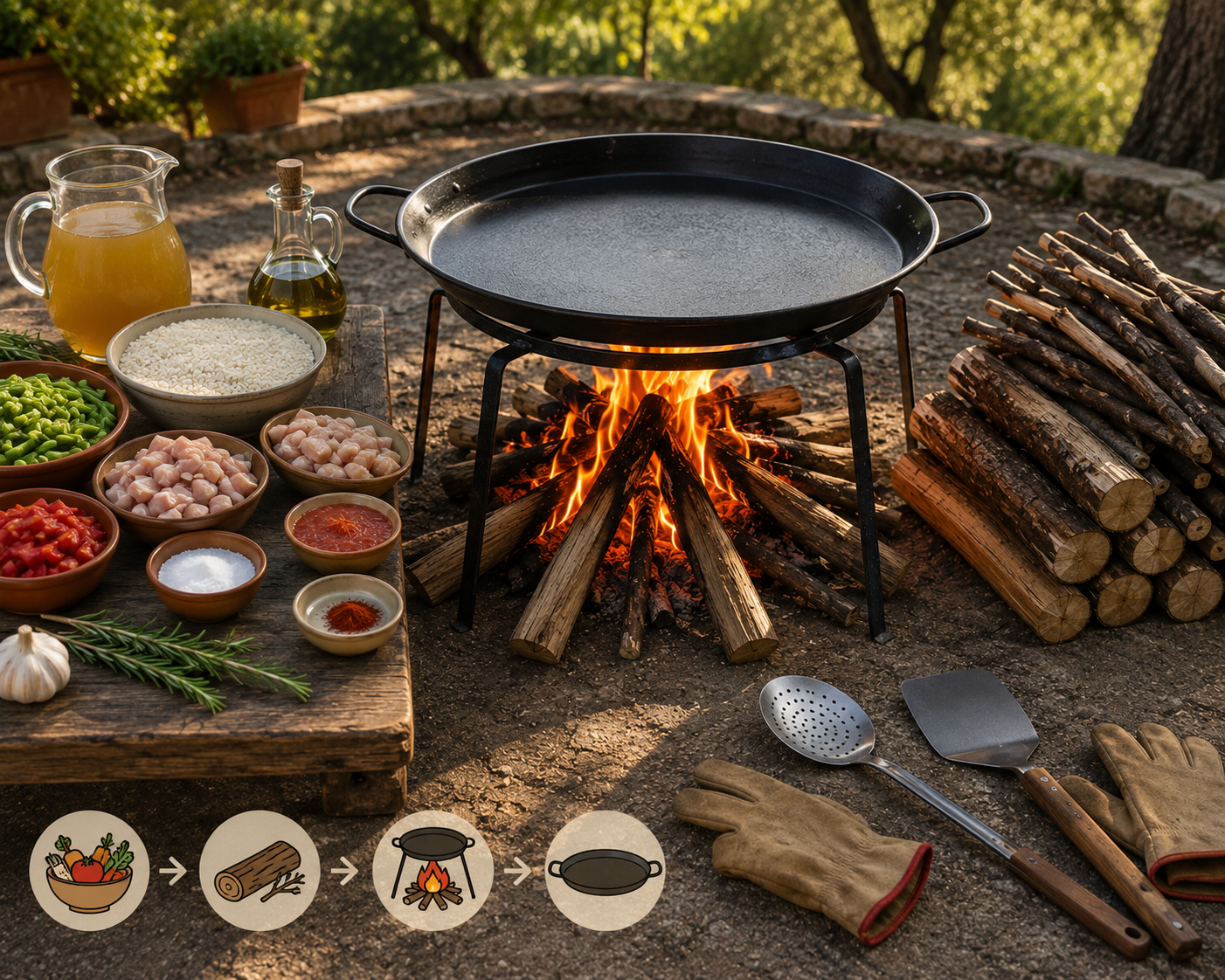
Before lighting the wood, it is best to have all the ingredients cleaned, cut and measured. The rice should be weighed, the stock or water prepared and the seasonings ready to use.
The wood must also be prepared. Ideally, separate thin branches for lighting and increasing the fire from thicker pieces for maintaining a stable temperature during cooking.
The paella pan should be placed on a firm and safe surface. It is important to check that it is level before adding the oil, as this will prevent the liquid from accumulating on only one side.
In addition, cooking should always be done outdoors, in a ventilated area where making a fire is permitted. Cooking with wood in enclosed spaces or in places with a fire risk is not recommended.
Adding the stock and rice: times, ratios and fire control
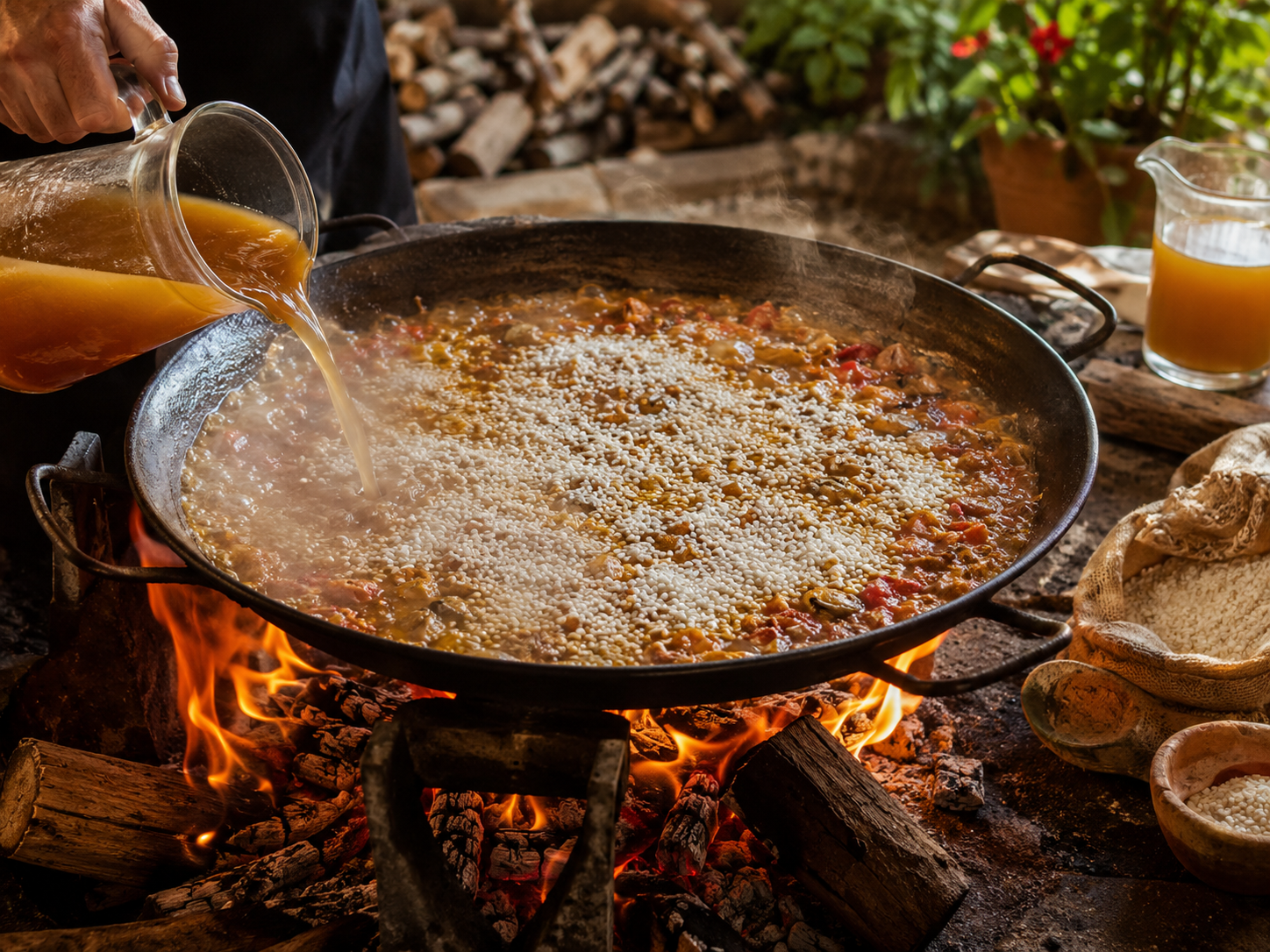
When the sofrito is well cooked, the stock or water is added and the intensity of the fire is increased so it boils strongly. This boil helps concentrate the flavour and prepare the paella for cooking the rice.
Before adding the rice, the salt level should be checked. The stock must be tasty, as afterwards it is not advisable to correct it or stir too much.
The rice can be added in the shape of a cross or spread directly across the whole paella pan. It is then distributed evenly with the paddle and left to cook without being moved.
As a guide, rice for paella usually needs between 16 and 20 minutes of cooking. During the first few minutes, it is advisable to maintain a strong fire. Then the intensity is lowered so the grain cooks evenly. In the final minutes, the fire can be increased to achieve the socarrat.
If the stock evaporates too soon, the fire has probably been too strong. If there is too much stock left at the end, the fire may have been too gentle or more liquid than necessary may have been added.
Common mistakes when making a wood-fired paella and how to avoid them
One of the most common mistakes when making a wood-fired paella is not controlling the intensity of the fire properly. If the flame remains too strong throughout cooking, the stock will evaporate too quickly and the rice may turn out hard or burnt.
Another frequent mistake is using damp wood, green or unsuitable wood. This type of wood produces too much smoke, lights poorly and makes it difficult to maintain stable cooking.
It is also common to use a paella pan that is too small for the amount of rice. When the layer of rice is too thick, it is harder to achieve a loose texture and even cooking.
Stirring the rice after adding it is another important mistake. Once distributed, the rice should cook without being moved to prevent it from releasing too much starch and making the paella pasty.
Finally, not leaving the paella to rest can affect the final result. A few minutes of resting helps the rice settle and the flavours blend better.
Fire too strong, poor choice of wood or too much stock
A fire that is too strong is one of the main problems when cooking with wood. To avoid this, use an intense flame at the beginning, but reduce the heat during the cooking of the rice.
Poor choice of wood can also ruin the result. Dry wood, clean wood suitable for cooking should always be used. Good wood for paella makes fire control easier and improves the aroma of the paella.
Too much stock can make the rice overcooked or give it an overly soft texture. That is why it is important to respect the ratios and adjust the amount of liquid to the type of rice, the size of the paella pan and the intensity of the fire.
Tips for making the perfect wood-fired paella
To make the perfect wood-fired paella, the most important thing is to control the fire at each stage. The same intensity is not needed for sautéing, boiling the stock, cooking the rice or achieving the socarrat.
It is also essential to use a paella pan of the right size. The rice should be spread out in a thin, even layer so it cooks properly.
Another important tip is not to improvise. Before lighting the fire, everything should be ready: ingredients, rice, stock, seasonings, utensils and wood.
It is also advisable not to overload the paella with too many ingredients. A good paella needs balance between rice, sofrito, stock and fire.
Fire control, final resting time and rice texture
Fire control is the key to a good wood-fired paella. You should start with a lively fire, maintain steady cooking in the middle stage and finish with a controlled burst of heat to form the socarrat.
The final resting time is also important. After turning off the fire, it is advisable to leave the paella to rest for 5 to 10 minutes before serving. This allows the rice to settle and improves its texture.
The ideal rice texture should be loose, tasty and slightly firm. If the fire, stock and resting time have been well controlled, the paella will have a thin layer, an intense flavour and a balanced socarrat.