

What do you add to the paella first: the rice or the water?
What goes into Valencian paella first: the rice or the water?
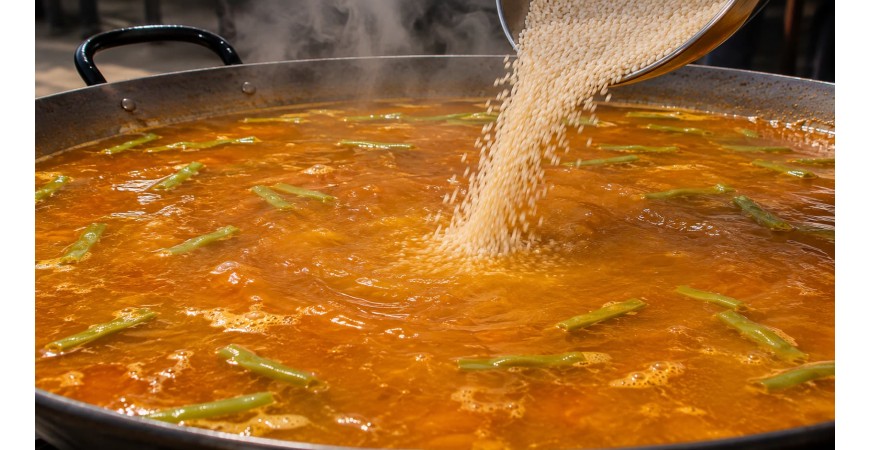
In traditional Valencian paella, the water (or stock) goes in first, followed by the rice once the liquid is boiling and full of flavour. In many seafood or fish paellas made with stock prepared in advance, the rice is sautéed first and the hot stock is added afterwards.
It may not seem like it, but one of the first questions people ask when they start cooking rice dishes resembles the classic chicken-or-egg debate: what goes into the paella first, the rice or the water? The answer depends on the type of paella and how the stock is prepared.
The order of the ingredients is not arbitrary: it affects how the stock develops, preparation times and the cooking of the rice. Let's see how it works in Valencian paella and what changes when we use a stock prepared in advance.
Order of ingredients in Valencian paella
This is the usual order of ingredients in a traditional Valencian paella, explained simply:
- Olive oil: heat it in the paella pan to start the sofrito.
- Meat: brown the chicken and rabbit to develop flavour.
- Vegetables: add the green beans and, depending on the recipe, the garrofón beans either at this stage or while the stock is cooking.
- Tomato and paprika: sauté the tomato, then carefully add the paprika so it does not burn.
- Water: add it together with the salt and seasonings to make the stock.
- Rice: add it last, when the stock is flavoursome, properly seasoned and boiling.
The key point: with this method, the rice is not sautéed beforehand; it cooks directly in the stock made in the paella pan itself.
When should you add the rice to Valencian paella?
Add the rice when the stock is boiling, has developed enough flavour, and the salt and liquid quantity have been adjusted. In the traditional method, this is usually after 20–30 minutes of simmering the water with the meat, vegetables and sofrito, although the time varies according to the recipe and heat intensity.
At this point, spread the rice evenly across the surface. If you use bomba rice, allow approximately 18–20 minutes of cooking from the moment you add it, adjusting the heat so the rice cooks through and the paella finishes dry.
Rice or water first? The traditional method step by step
In the traditional Valencian recipe, first you make the sofrito, then add water to turn it into stock and finally add the rice. These are the steps and approximate timings:
- Brown the meat (10–15 minutes): add the oil and fry the chicken and rabbit until nicely browned.
- Finish the sofrito (5–8 minutes): add the green beans, grated tomato and finally the paprika, taking care not to burn it.
- Add water and make the stock (20–30 minutes): add the water, saffron and salt. Let it simmer so the ingredients release their flavours, keeping an eye on the reduction of the liquid.
- Add and cook the rice (18–20 minutes for bomba): once the stock is boiling and its flavour and quantity are right, add the rice and spread it out. Start over high heat and gradually lower it according to evaporation.
- Let it rest (about 5 minutes): turn off the heat and allow the rice to settle before serving.
The 20–30 minutes refers to making the stock in the paella pan itself, not to the rice cooking time. If you use stock prepared in advance, you can skip this waiting time during service, although time will already have been spent making or obtaining the stock.
What about seafood or fish paella? The rice can go in first
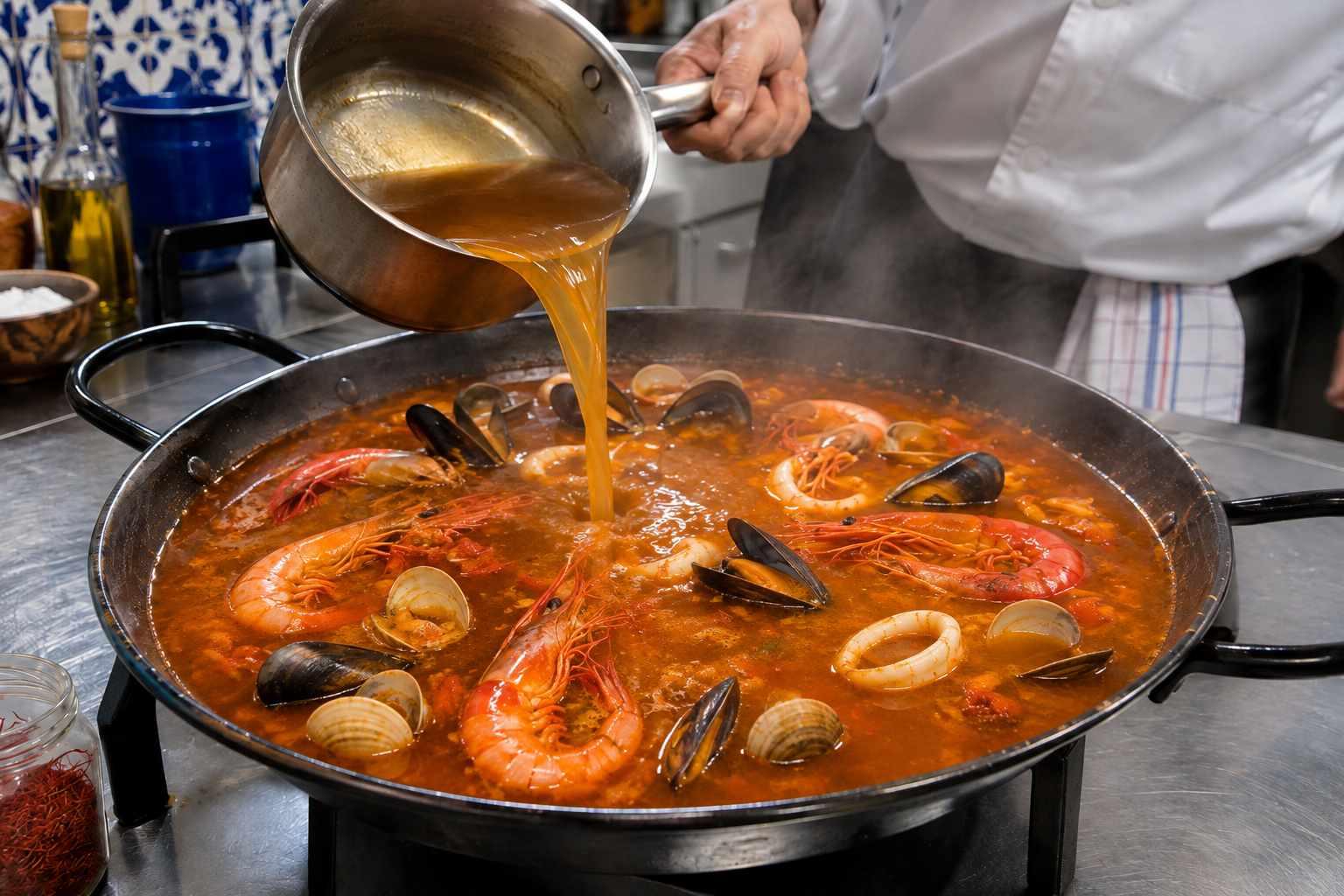
Many seafood or fish paellas use stock prepared in advance. With this method, after making the sofrito, add the rice and sauté it gently for 1–3 minutes, stirring so it absorbs the oil and flavours without burning. Then add the hot stock.
Some cooks refer to the rice becoming 'pearled', with a slightly shiny or translucent appearance during sautéing. This is only a rough visual guide, not an exact sign or proof that the grain has been sealed, although sautéing can slow down and regulate the rate at which the stock penetrates the rice.
The main difference is practical: we already have a flavoursome stock and do not need to make it from water in the paella pan. Sautéing the rice can change how it behaves during cooking, but does not by itself guarantee that it will absorb less flavour or avoid overcooking. Some seafood rice recipes also add the stock before the rice; there is no single method for all fish-based rice dishes.
Water or prepared stock: comparing the two methods
Both methods can produce an excellent paella. The choice depends on the recipe, the quality of the stock and the time available.
| Aspect | Water added to the paella pan | Stock prepared in advance |
|---|---|---|
| Order | Sofrito → water → simmering the stock → rice. | Sofrito → rice (optionally sautéed) → hot stock; the stock can also be added before the rice. |
| Time in the paella pan | Includes around 20–30 minutes to develop the stock, in addition to making the sofrito and cooking the rice. | Can save those 20–30 minutes during cooking if the stock is ready and has been heated beforehand. |
| Advantages | Flavour develops in the same pan; no separate stock needs to be prepared. | Speeds up service and allows the stock to be made and adjusted ahead of time. |
| Drawbacks | Requires more time when cooking and careful control of the initial evaporation. | Requires advance preparation and a stock suitable for the recipe. |
| Who is it best for? | Anyone wanting to follow the traditional process without prepared stock. | Restaurants, services preparing several paellas, or anyone who likes to plan ahead. |
Which is better? Neither is inherently better: an excellent stock prepared in advance can produce outstanding results, but stock made directly in the paella pan can also develop plenty of flavour.
What matters is controlling the liquid ratio, salt, heat and cooking time so the stock gives the paella great flavour. Whether it is made in the paella pan or beforehand should not, in itself, determine the flavour; choose the method that best suits your needs and preferences.
Amount of water or stock for each quantity of rice
The amount of water used for Valencian paella is not the same as the quantity of stock present when the rice starts cooking: some of the initial water evaporates while the stock is being made. As an illustrative example, take a traditional recipe for 4 portions with 400 g of rice, 2.6 litres of water at the start and around 1.2 litres remaining when the rice is added.
| Portions | Rice | Initial water (traditional) | Stock when adding the rice* |
|---|---|---|---|
| 2 | 200 g | 1.3 L | 0.6 L |
| 4 | 400 g | 2.6 L | 1.2 L |
| 6 | 600 g | 3.9 L | 1.8 L |
| 8 | 800 g | 5.2 L | 2.4 L |
| 10 | 1 kg | 6.5 L | 3 L |
*Illustrative amounts calculated by scaling up a reference recipe, not universal ratios. In a real paella, the pan diameter, rice layer thickness, rice variety, heat intensity and evaporation all matter. If using prepared stock, the last column is an approximate starting point, not a fixed amount for every recipe.
Are there other ways to make Valencian paella?
Yes. Although the traditional method usually starts with water added directly to the sofrito, you can also prepare Valencian paella using stock made in advance. This technique is popular in restaurants because it makes it easier to organise the work and shorten preparation time during service.
If the stock is ready, you can save approximately 20–30 minutes of simmering in the paella pan, but that does not mean the entire process requires less work: the stock was prepared earlier. You may also choose to sauté the rice briefly or add it straight to the boiling stock, depending on the technique used.
Practices differ between cooks, families and areas of the Valencian Community. It is therefore useful to distinguish between the traditional preparation method and adaptations of the recipe, without claiming that a single sequence works for every kind of paella.
Common mistakes when adding rice and water
- Adding the rice too early: if the stock has not developed enough flavour or reduced sufficiently, it will be difficult to achieve balanced rice.
- Using bland or poorly seasoned stock: the rice will absorb that liquid and the finished dish will lack intensity.
- Stirring constantly after spreading the rice: this can release starch and spoil the separate-grain texture of a dry paella.
- Keeping the heat too low from the start: this can lengthen the cooking time and upset evaporation. It is usual to start with higher heat and reduce it later.
- Adding too much water or stock: if the liquid does not evaporate in time, the rice may overcook before the paella becomes dry.
Frequently asked questions about the order of ingredients
Want to keep improving your paellas?
Discover more recipes, rice tips and cooking guides on the Original Paella blog.
Visit the Original Paella blog
Javier Baixauli
Our CEO and founder, Javier Baixauli, naturally, is a huge paella lover. In this tutorial, he demonstrates his love for all things paella and rice. With over 20 years in the world of rice and hospitality, he combines his love for paella with the experience of hundreds of catering events, festivities, and popular celebrations, not to mention paellas among friends and family. Catering, paella equipment rentals, thousands of products sold worldwide, guides, tutorials, and in-person advice, Javier and the Original Paella team pride themselves on ensuring that the love for paella spreads worldwide with every action in their name, including, in this case, this tutorial. Follow and discover other tutorials, events, and recipes on our Instagram @originalpaella.