

How to Make Arroz a la Llauna: Step-by-Step Oven Recipe
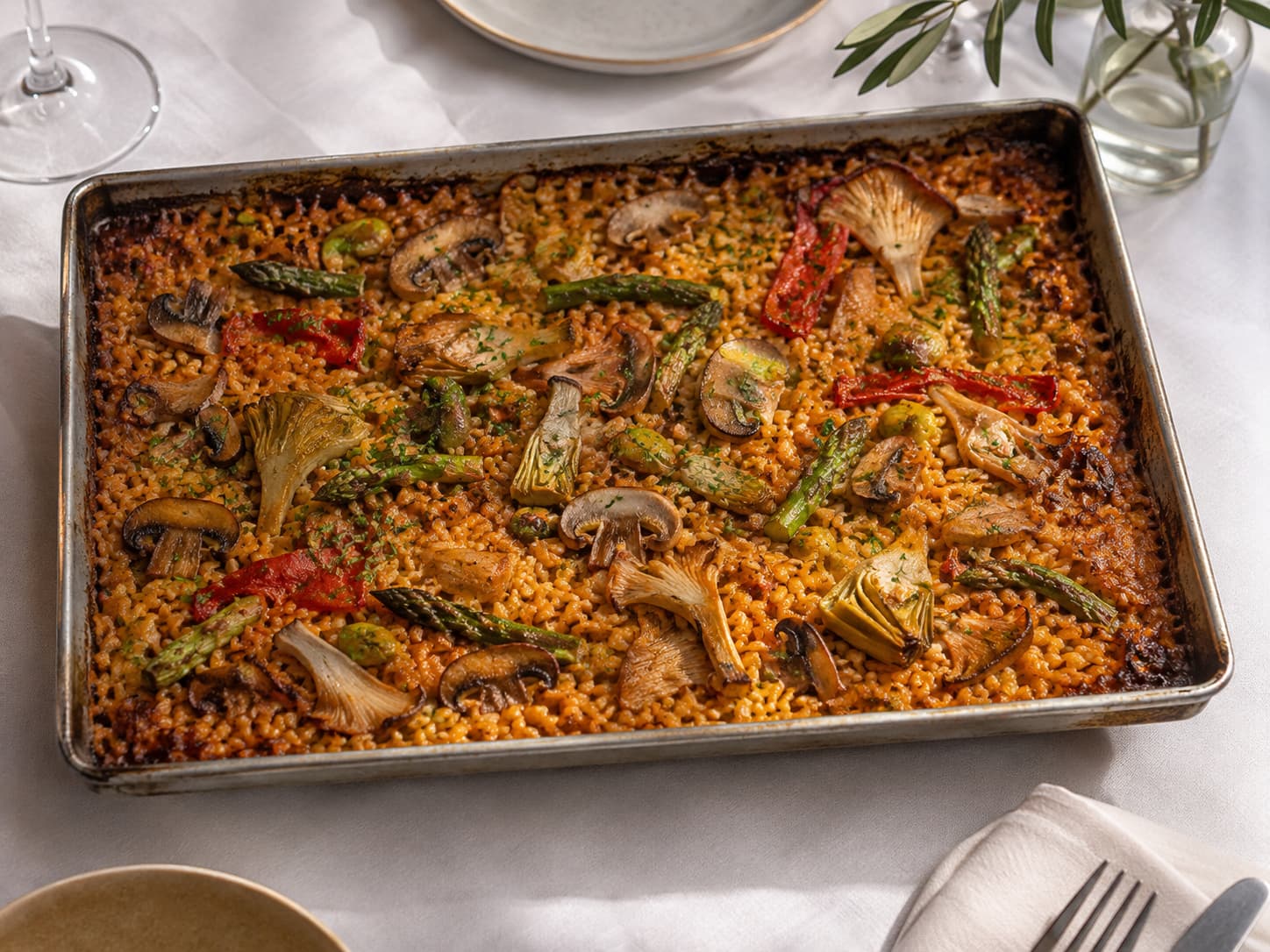
Arroz a la llauna is a dry, thin-layer rice dish cooked in a metal tray, usually rectangular, and finished in the oven. This recipe serves 2 people, takes around 35–45 minutes with the stock already prepared and uses an oven preheated to 200 °C without a fan or 190 °C with a fan.
A llauna lets you make extra-thin rice dishes with a very appealing presentation. Although traditionally also used for other recipes—such as snails a la llauna, or “llaunes per caragols”—it has now become a particularly interesting option for cooking small portions of rice and serving them directly at the table.
What Is Arroz a la Llauna?
The arroz a la llauna is a Valencian-inspired dish that uses a shallow metal tray to create a thin, even layer of rice. The vessel comes from the tradition of cooking food in llaunas, although its use for extra-thin rice dishes has become popular in modern cuisine. Unlike paella, which is usually finished over direct heat, this rice finishes cooking in the oven. You may also see the names arròs a la llauna or arroz a la llanda, depending on the language and area.
What Is a Llauna and Which Size Should You Choose?
A llauna is a shallow metal tray or pan, usually rectangular or square, designed for cooking food in a thin layer. Its corners and straight sides make it ideal for what is sometimes called square rice. The aim is not to fill the tray to the top: it is to spread the rice in a thin layer for even cooking and proper evaporation of the stock.
Explore Original Paella's rectangular and square paella pans , as well as our polished-steel llauna for rice.
Llauna Materials: Steel, Aluminium and Enamelled Steel
- Polished steel: conducts heat efficiently and allows the base to brown when the heat is controlled. It needs cleaning, drying and a thin protective coating of oil to prevent rust. This is the classic polished llauna from Original Paella.
- Aluminium: is lightweight and conducts heat well. Depending on its thickness, it may heat up and cool down quickly, so watch the base to avoid excessive browning. Always check whether the specific tray is suitable for the oven and direct heat.
- Enamelled steel: has a protective coating that makes cleaning easier and prevents rust as long as the enamel remains intact. Browning also depends on thickness and heat exposure. See the enamelled llauna in our catalogue.
Tip: no material guarantees socarrat on its own: the rice layer, amount of stock, position of the tray and distribution of heat all matter.
Llauna Size by Number of Servings
These dimensions and rice capacities come from Original Paella's llauna product specifications. The servings are approximate, based on portions of around 75–100 g of uncooked rice, and should be adjusted to appetite and desired thickness.
| Llauna dimensions | Recommended rice quantity | Approximate servings |
|---|---|---|
| 22 × 22 cm | 125–150 g | 1–2 |
| 26 × 30 cm | 200–250 g | 2–3 |
| 32 × 42 cm | 250–350 g | 3–4 |
| 40 × 40 cm | 300–400 g | 4–5 |
The dimensions refer to the tray itself; also check the outer dimensions including handles and the usable space in your oven. The serving estimates should be checked in practice according to the recipe and the amount of rice per person.
Ingredients for Arroz a la Llauna (2 People)
This basic recipe works with fish, seafood, vegetables or pre-cooked ingredients. For two regular portions, we recommend a 26 × 30 cm llauna, with the following ingredients:
- 200 g of rice , short-grain, preferably Albufera, Senia or Bomba.
- 550–600 ml of hot stock or fish stock, an approximate starting amount to adjust according to the rice variety, llauna and oven.
- 80–100 g of concentrated sofrito made with tomato and vegetables, previously reduced.
- 20–25 ml of extra virgin olive oil.
- ½ teaspoon of sweet paprika (approximately 1–2 g), taking care not to burn it.
- 150–200 g of main ingredients , already cleaned: for example, cuttlefish and prawns, or mixed vegetables.
- Salt to taste and optionally saffron or food colouring.
To increase the number of servings: allow approximately 75–100 g of uncooked rice per person and initially increase the stock in the same proportion, but readjust it according to the llauna's surface area and evaporation. Simply doubling the quantities is not enough if you use the same tray.
How to Make Arroz a la Llauna Step by Step
There are two ways to prepare arroz a la llauna. The double-cooking method starts in a frying pan and finishes in the oven; the direct method uses a llauna suitable for both the hob and oven. In either case, the stock must be ready and the oven preheated before you start cooking the rice.
Double-Cooking Method: Frying Pan and Oven
- Preheat the oven to 200 °C with top and bottom heat, or to 190 °C with a fan. Heat the stock separately until very hot.
- Prepare the sofrito (approximately 8–12 minutes). In a large frying pan, cook the main ingredients and set aside those that only need brief cooking. Reduce the tomato and vegetables to a concentrated sofrito.
- Add the rice (1 minute). Mix it with the sofrito and paprika without letting the paprika burn.
- Add the hot stock and cook for around 10 minutes. Keep it bubbling vigorously but under control, and avoid stirring the rice once it has been evenly spread.
- Turn off the heat and pause for 2–3 minutes. The rice continues absorbing liquid and retains heat; this pause is included in the planned total cooking time of 18–19 minutes and is not added at the end.
- Spread the rice in the llauna. Create the most even layer possible and add the reserved ingredients. There should be a little stock left to finish cooking, but not so much that the final dish becomes soupy.
- Finish in the oven for around 5–7 minutes. Monitor the rice and evaporation. If the grains are still hard and there is no liquid left, pour a little hot stock around the edges.
- Final resting time: 5 minutes outside the oven. Serve directly in the llauna, using a heatproof surface protector for the table.
Example for rice with an 18-minute cooking time: 10 minutes in the frying pan + 2 minutes with the heat off + 6 minutes in the oven = 18 minutes. Then allow the 5-minute final resting time. The intermediate pause and final resting time are two different stages.

Direct Method: Everything in the Llauna
This method requires fewer utensils, but you need a llauna suitable for both direct heat and the oven. Do not use ordinary household baking trays over a flame unless the manufacturer expressly permits it.
- Preheat the oven to 200 °C without a fan, or 190 °C with a fan.
- Heat the oil in the llauna. Sear the vegetables, meat or seafood, setting aside any ingredients that could become overcooked.
- Prepare the concentrated sofrito (approximately 8–12 minutes). Cook it down until much of the water has evaporated to concentrate the flavour.
- Add the rice and coat it in oil (1–2 minutes). Coating the rice means gently frying it in the oil and sofrito until the grains look slightly glossy or translucent; it does not mean browning or toasting the rice.
- Add the paprika and hot stock. Spread the rice evenly and add the reserved ingredients at the appropriate moment so they do not dry out.
- Cook over direct heat for around 8 minutes. Maintain an even simmer and do not stir the rice during this stage.
- Transfer the llauna to the oven for around 10 minutes. The aim is to reach approximately 18 minutes of total rice cooking time (8 + 10), adjusted for the rice variety and the amount of stock remaining.
- Leave to rest for 5 minutes outside the oven before serving.
Oven Temperature and Cooking Time for Arroz a la Llauna
References to 190, 200 and 220 °C are not necessarily contradictory: the recommended temperature changes according to fan use, preheating and cooking method. This table gives starting settings for both methods above.
| Method | Without fan | With fan | Time in oven |
|---|---|---|---|
| Double cooking | 200 °C (up to 220 °C if your oven requires it) | 190 °C | 5–7 min after the frying-pan stage and pause |
| All in the llauna | 200 °C | 190 °C | 10 min after 8 min over direct heat |
These are guide temperatures for preheated domestic ovens; always check the rice texture and evaporation. The 18–19 minutes refers to the rice's total cooking time, not an additional 18–19 minutes in the oven after cooking it in a frying pan.
A professional combi oven can be set to a certain humidity level, but there is no need to set 20% humidity for this recipe in a conventional oven. As every oven evaporates liquid differently, checking the stock level and doneness of the rice is more useful than following a universal percentage.
How to Achieve Socarrat in an Oven-Baked Llauna
The socarrat is the toasted layer of rice formed where it touches the hot base of the pan. It is also possible to achieve it in a llauna, but bear in mind that you will get it on the top of your llauna, rather than underneath as is usually the case with paella.
To encourage it, spread the rice in a thin, even layer, use a suitable llauna and make sure the tray receives enough heat from below. A middle-to-low oven position may help, depending on the model. Watch the final stage: good socarrat should be toasted and fragrant, not burnt.
For a crisp upper surface, you can finish with 1–2 minutes under the grill, watching the rice constantly. Browning the top may taste delicious, but it is not the same as socarrat on the base. Grilling does not replace proper rice cooking or fix an excess of stock.
Arroz a la Llauna vs Paella: Key Differences
| Feature | Arroz a la llauna | Traditional paella |
|---|---|---|
| Cooking vessel | Shallow rectangular or square tray | Shallow round paella pan |
| Heat source | Direct heat and oven, or pre-cooking and oven | Usually gas or wood fire from start to finish |
| Cooking | Finished in the oven; extra-thin layer | Controlled cooking over direct heat; thin or medium layer |
| Socarrat | Possible on the base; the surface can also be grilled | Sought on the bottom of the paella pan |
| Servings | Very practical for small portions and individual service | Suitable for anything from individual servings to large groups |
Both techniques can produce excellent dry rice dishes. To choose a pan according to the number of diners, see our paella pan size and serving guide.
Tips and Common Mistakes
- Overcooked rice: do not add another 18 minutes in the oven after the time already spent in the frying pan. Count from when you add the stock and adjust the time to the rice variety.
- Not enough stock: if it evaporates before the rice is cooked, add a little hot stock, preferably around the edges, to avoid interrupting cooking.
- Rice layer too thick: using more rice than recommended prevents the extra-thin texture. Choose a larger llauna rather than increasing the depth.
- Oven not preheated: the times shown assume the oven is already hot; placing the llauna into a cold oven changes the result.
- Uneven heat distribution: if cooking directly in the llauna, use a heat source suitable for its entire base and check that the pan can be used over direct heat.
Frequently Asked Questions About Arroz a la Llauna
How Much Rice and Stock Should You Put in a Llauna?
For two people, you can start with 200 g of rice and 550–600 ml of hot stock in a 26 × 30 cm llauna. Adjust the liquid for the rice variety and oven; there is no exact ratio for every situation. We recommend checking our stock preparation guide and paella pan size chart.
Which Rice Variety Is Best for a Llauna?
Short-grain rice varieties such as Albufera, Senia or Bomba work well for a llauna. Senia and Albufera make flavourful rice dishes, while Bomba offers greater tolerance if the cooking time runs slightly longer. As their cooking times and liquid needs differ, it is important to know which variety you are using and test the rice before removing the tray.
Can You Make Arroz a la Llauna Without a Llauna?
Yes. You can use a shallow oven-safe metal baking dish, a suitable casserole dish or a rectangular paella pan. The key is having enough surface area to spread the rice without creating too thick a layer. If you want to begin cooking over a flame, first check that the manufacturer permits it: not every oven tray is suitable for direct heat.
Llauna or Llanda: Is There a Difference?
In this context, both terms refer to metal oven trays, although terminology varies by region and culinary tradition. When choosing a tray for rice, focus less on its name and more on its shape, depth, material and heat compatibility: these are the features that directly affect the result.
How Long Should the Rice Rest After Coming Out of the Oven?
Leave the rice to rest for 5 minutes outside the oven so that its moisture settles and the grains finish setting before serving.
Ready to Cook Your Own Arroz a la Llauna?
Discover our polished and enamelled llaunas and choose the best one for your oven and number of diners.
VIEW LLAUNAS AND RECTANGULAR PAELLA PANS