


Best rice variety and brand for paella
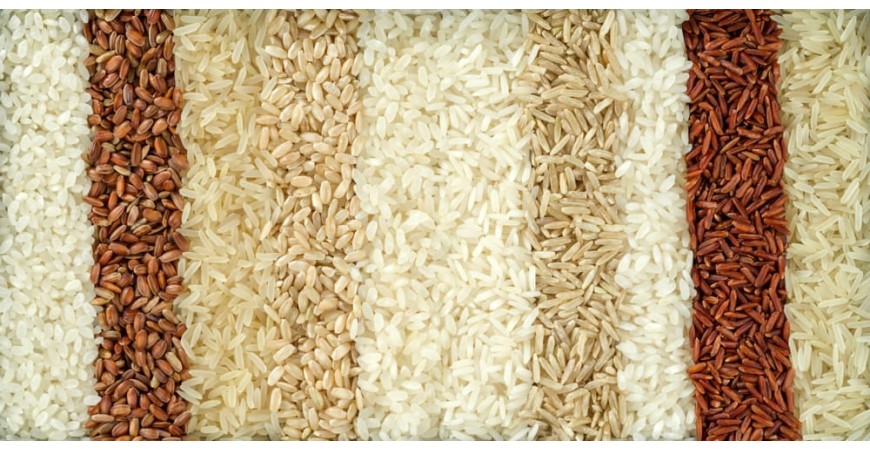
What is the best rice brand for paella?
There are many brands: Arroz la Fallera, Arroz Santo Tomas, Arroz Dacsa, La Arroz Carreta, Arroz Brillante, Arroz Sabroz, Arroz Nomen, Arroz SOS, Arroz Tartana, Arroz la Carreta, Arroz el Cazador and many more...
Surely many of you have heard statements about these brands such as "the best rice for paella is Dacsa", "the best rice for paella is La Fallera", "in my paellas I only use Brillante rice", etc.
We can confidently state that all those expressions are, at the very least, inaccurate. This is because the differences in rice come from the different rice varieties (Sendra, Albufera, Bomba, Maratelli, etc...) and not from the brands, where differences are minimal and mainly based on quality parameters such as rice freshness, percentage of broken grains, etc...
1 - Importance of rice origin
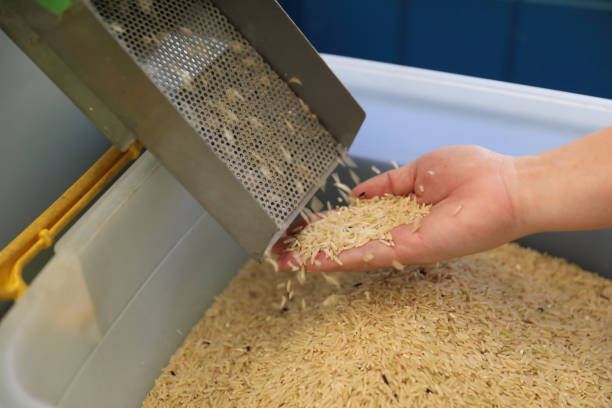
It is important to guarantee the origin of the rice, since many companies include rice of different origins in their packages. That is why it is highly recommended to always choose rice with denomination of origin labels that guarantee its provenance.
This also makes it much easier to master the cooking point of the rice than with rice packages whose mix may vary depending on market availability and price.
2 - Differences between production areas

There are three areas that account for more than 94% of rice production in Spain: the banks of the Guadalquivir (58%), the Ebro (19%), and the Albufera of Valencia (17%). Other less significant areas include Calasparra or even parts of Navarra and Huesca. All of them are capable of producing excellent rice for paella.
The techniques used are very similar since many of the rice companies operating in the Guadalquivir were Valencians who transferred their knowledge to larger and more productive areas than the Albufera itself.
Therefore, the use of fertilizers, cultivation and harvesting techniques, storage, milling, and polishing of rice, etc., are very similar in all areas. If we analyze it, even the Mediterranean climate is common, so in all regions we can find excellent rice for paella, making it more important to guarantee its origin (that it is not a mix) than the specific region it comes from.
3 - Rice brand marketing strategies
When marketing rice, brands use many strategies. Some even promote the use of special seeds to make their brand appear better than the rest, but in reality this is also inaccurate. Rice plantations from different brands are very close to each other, and insects pollinate without distinguishing brands, so genetic hybridization will make them practically the same rice in just 3/4 generations.
Other strategies involve claiming that the rice has been aged in the same way as wine. However, one of the main quality parameters of rice is its freshness. Unlike wine, rice does not improve with aging.
Thus, we understand that we must try to demystify these kinds of messages, which at the very least cause confusion due to the consumer’s lack of knowledge.
Conclusion
When choosing the best rice for paella, the first step will be to look for rice that guarantees its origin, whether it comes from the Albufera of Valencia, the Ebro Delta, or the Guadalquivir.
That guarantee of origin will allow us to better understand the ideal cooking point of the rice since the differences between packages will be minimal, unlike those brands that do not guarantee origin and therefore may contain mixes of different origins and varieties with proportions determined by the manufacturer, and especially by product availability and price.
The second factor will be focusing on the rice variety. Different varieties have genetic differences and, therefore, differences in the behavior of rice that give them unique characteristics, making them the best rice depending on the final use of the paella. Let’s look at a practical example:
When we make a paella at home, usually it will be thin and eaten immediately after the resting time. However, when cooking a giant paella for 200 people, it will be several centimeters thick and the serving will last several tens of minutes.
In this case, logically, for the paella made at home, a grain with a great capacity to absorb flavor but less resistant is the most suitable (Sendra or Albufera types). However, for the giant paella, a harder, more resistant rice is much better to avoid overcooking and the undesirable mushy texture. Imagine a restaurant menu paella cooked at 1:00 p.m. and served until 3:00 p.m. In this case, just like with the giant paella, we will get much better results using resistant rice varieties (Bomba and Maratelli).
Tastes vary! Without a doubt, another important point will be the diners’ preferences. From our experience cooking paellas all over Spain, we know that in certain regions there are different preferences regarding the doneness of the rice.
In Valencia, people prefer paella to be completely dry, with the rice fully cooked but separate. However, in northern regions, people prefer a creamier rice with a higher degree of cooking, so the final result is not loose and separate. Strictly speaking, the Valencian finish would be more correct, but tastes are varied and infinite, so the cooking point and the ideal rice variety will also depend on the desired outcome.
And the brand? Well, the brand may be the least important factor among those described, as we have mentioned, the differences between brands are minimal, and the previously mentioned factors have much greater importance.
How does rice variety affect my paella?
Just as we choose our equipment according to our needs, the variety of rice we decide to use will also depend on how we want and plan to serve our paella. Depending on whether our rice will be dry, creamy, or soupy, or whether it will be served in the paella pan right after cooking or served in plates, each of these details will guide us toward one rice variety or another to achieve the perfect paella for our diners.




Senia Rice
A fine and delicate rice variety, recommended for a cooking time of 16 minutes, stands out for its great absorption capacity, equivalent to 1 part rice to 2 parts broth. It turns out to be one of the favorite rice varieties of master rice cooks, since it guarantees loose grains that absorb the broth very well and therefore obtain more flavor from it.
It is a variety especially recommended for dry rice dishes, preferably those that will be served immediately along with the paella once cooking is finished.
On the other hand, it is a rice variety with very little resistance, so its use is limited to paellas that will be consumed immediately after cooking, and also for rice cooks with some experience, since just one minute of overcooking or a small excess of broth will cause the rice to lose its integrity, break open, and make the paella mushy.
Albufera Rice
What happens when 2 of the best rice varieties, senia and bomba, decide to have a child? Well, we get the albufera rice variety.
A genetic combination, created by IVIA (Valencian Institute of Agrarian Research), indicates that it possesses the benefits of both varieties: on one hand, the high absorption capacity of senia and, on the other, the resistance of bomba rice to overcooking. It is a grain of intermediate hardness and resistance, halfway between a very resistant rice like bomba and a low-resistance rice like senia.
Due to these qualities, it is a very versatile rice variety that offers great results in almost any type of rice dish, whether a dry paella, a creamy rice, or a soupy rice, making it a favorite among many master rice cooks, including ourselves.
Bomba Rice
A short-grain and pearly rice variety, usually the same size or a bit smaller than senia rice. It stands out for its great resistance, making it an easy-to-work rice that is very forgiving, while also combining a good flavor absorption capacity, remaining whole and loose once cooked.
It is considered by many experts as one of the best rice varieties, although it should be noted that, due to its organoleptic characteristics, it is more resistant and easier to work with, but requires a slightly longer cooking time, approximately 17 to 20 minutes.
This is a rice variety recommended for master rice cooks who seek a cooked and whole grain without assuming the high risks of overcooking. Therefore, it is an easy-to-use rice also recommended for novice cooks who do not want to risk their first paellas and seek an exceptional result without major risks. Lastly, its high resistance also makes it very suitable for demanding rice dishes (giant paellas, menu paellas, takeaway paellas, portion sales, etc.).
On the other hand, its drawback is its high price, since its production capacity per hectare is around 50% lower than the senia variety. Moreover, being a rice rich in amylose (between 25% and 30%), the final texture of the grain once cooked is very dry, hence its looseness. Senia varieties, by contrast, contain more amylopectin, which makes the grain stickier and coated with a small amount of broth that provides greater flavor intensity.
Maratelli Rice
A round-grain and pearly-textured rice variety, also rich in amylose (between 19% and 21%), giving it exceptional cooking resistance.
Unlike bomba rice, maratelli has high productivity (kilos per hectare), making its price fall between senia (more affordable) and bomba (the most expensive).
This quality makes it the most recommended rice for catering, restaurants, and takeaway services, since it maintains great resistance for longer periods compared to other rice varieties until consumption, making it a very effective rice for soupy, creamy rice dishes and risottos, while also perfectly suitable for dry rice dishes.
Marisma Rice
With thick, round, and very pearly grains, its high absorption capacity due to its high amylose content makes it a coveted rice for soupy, creamy rice dishes and desserts, even retaining the broth’s aroma very well.
Its low starch loss also allows for a creamy texture, but it should be noted that it does not withstand overcooking well, breaking if cooking time or heat is exceeded.
Which is the best rice variety for paella according to the recipe type?
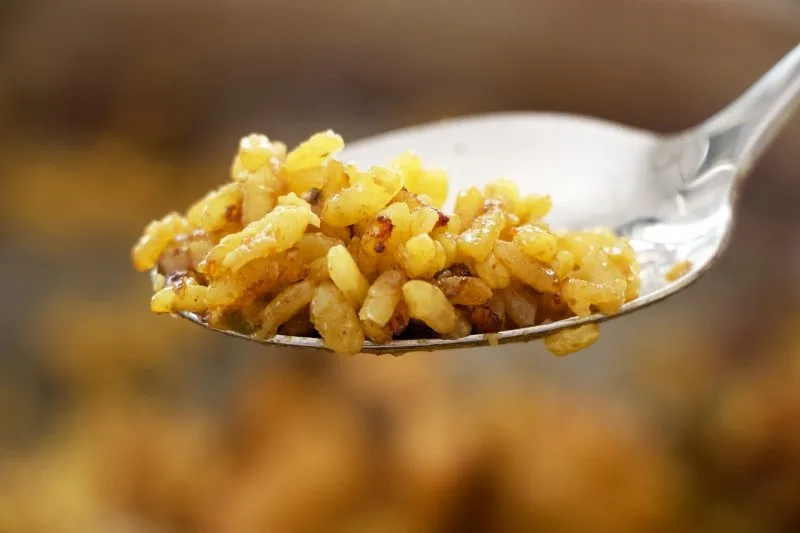
For a traditional Valencian paella:
The traditional paella is always meant to be served as soon as it is finished, therefore we recommend Senia, Bomba, and Albufera rice. Of these, we personally prefer Albufera because of its balance between flavor absorption and grain resistance. Buy Senia, Bomba, and Albufera rice here.
For a restaurant or catering paella
Generally, restaurants and catering services try to serve their rice as soon as it is cooked, but the large number of customers and the need to prepare dishes and cutlery may delay serving the paella. Therefore, we recommend a more resistant rice, such as Maratelli or Bomba varieties, whose greater endurance will allow serving a paella as if freshly made, even if it takes a little longer to reach the table.
For creamy or soupy rice dishes
If what we are looking for is a creamy or soupy rice, we recommend Maratelli rice, whose endurance makes it perfect for staying in the broth without losing its qualities. But if we want a creamier texture, Marisma rice is a good option, though care must be taken due to the risk of breaking from overcooking.
Tips for choosing the best brand and variety of rice for your paella
- Choose a rice variety suitable for the paella you are going to cook. Think about the ingredients, whether you will serve the paella immediately, or whether it will be dry, creamy, or soupy. These factors will help you choose one variety over another.
- Check the expiration date. Although the standard date is usually more than enough to use the rice you buy, the closer it is to the current date, the more likely it is rice from the previous harvest. While this doesn’t affect the rice itself, if you want a recent harvest, look for local rice or packages with longer expiration dates.
- Make sure the rice you buy has a designation of origin (D.O.). This helps guarantee its quality, traceability, and whether it comes from a specific local variety. If you see on the package "Arroz de Valencia D.O.P" or "Arroz de Calasparra D.O.P," you’ll know it’s an authentic, regulated product.
The best rice brand for paella depends on you
No matter how many tips we give you, one thing is clear: the best rice variety and brand for you is the one that best suits your needs.
Look at the characteristics of the rice varieties and determine which best matches the paella you want to make: should it be served immediately or later, should it be creamy or dry, do you want a loose or creamy texture...?
From there, look for a brand that offers the rice variety you need and use our tips to make sure it’s a good brand. If, when you try it, you see that your paella turns out perfect, then you already know which variety and brand to use for your future paellas.

Javier Baixauli
Our CEO and founder, Javier Baixauli, naturally, is a huge paella lover. In this recipe, he demonstrates his love for all things paella and rice. With over 20 years in the world of rice and hospitality, he combines his love for paella with the experience of hundreds of catering events, festivities, and popular celebrations, not to mention paellas among friends and family. Catering, paella equipment rentals, thousands of products sold worldwide, guides, tutorials, and in-person advice, Javier and the Original Paella team pride themselves on ensuring that the love for paella spreads worldwide with every action in their name, including, in this case, this recipe. Follow and discover innovative recipes and events on our Instagram @originalpaella.