

How to cook a mixed paella
How to prepare mixed paella
* Times are approximate and may vary depending on the rice variety, heat intensity and paella pan size. The sofrito time is included in the total time. Difficulty ranges from 1 (very easy) to 5 (very difficult).
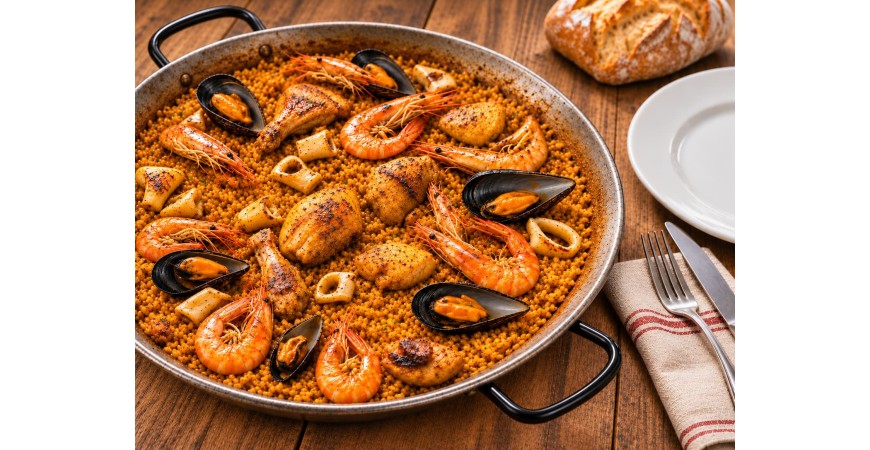
The mixed paella is one of the best-known and most widely prepared paella styles outside Valencia. Its defining feature is the combination of meat and seafood in a single recipe, producing a rich, flavourful and complete rice dish. Although it is not part of the traditional Valencian paella recipe—and some even regard it as a departure from that tradition—mixed paella has become a common fixture on restaurant menus alongside other classic rice dishes.
In this guide, we explain how to make mixed paella step by step, which ingredients to use, which rice to choose, how to make the stock properly and which common mistakes to avoid.
What is mixed paella and how does it differ from Valencian paella?
The main difference between mixed paella and traditional Valencian paella lies in their ingredients.
Valencian paella follows a well-defined traditional recipe based mainly on chicken, rabbit, green beans, garrofón (large white butter beans), tomato, olive oil, rice, water, saffron and salt, with some optional ingredients traditionally accepted in certain areas or seasons.
Mixed paella, by contrast, normally combines meat and seafood. Chicken is often paired with shrimp, prawns, squid, cuttlefish or mussels. Mixed paella should therefore not be seen as a variation of the traditional Valencian recipe, but as a different rice dish cooked in a paella pan that has developed its own culinary identity over time.
One of its main advantages is versatility: you can adjust the balance of meat and seafood, use different stocks and change certain ingredients according to the season or your preferences.
Mixed paella ingredients by number of servings
The quantities needed for mixed paella depend on the number of diners. This table provides recommended proportions for a mixed paella serving 2, 4, 6, 8 or 10 people, with a balanced combination of rice, meat, seafood and vegetables.
| Ingredients | 2 people | 4 people | 6 people | 8 people | 10 people |
|---|---|---|---|---|---|
| Rice | 200 g | 400 g | 600 g | 800 g | 1 kg |
| Chicken, cut into pieces | 200-250 g | 400-500 g | 600-750 g | 800 g-1 kg | 1-1,25 kg |
| Shrimp or prawns | 4 | 8 | 12 | 16 | 20 |
| Squid or cuttlefish | 125 g | 250 g | 375 g | 500 g | 625 g |
| Mussels | 4-6 | 8-12 | 12-18 | 16-24 | 20-30 |
| Green beans | 75 g | 150 g | 225 g | 300 g | 375 g |
| Grated ripe tomato | 1/2 | 1 | 1 1/2 | 2 | 2 1/2 |
| Stock | 600-700 ml | 1,2-1,4 L | 1,8-2,1 L | 2,4-2,8 L | 3-3,5 L |
| Extra virgin olive oil | To taste | To taste | To taste | To taste | To taste |
| Saffron or saffron infusion | To taste | To taste | To taste | To taste | To taste |
| Sweet paprika | To taste | To taste | To taste | To taste | To taste |
| Salt | To taste | To taste | To taste | To taste | To taste |
| Rosemary (optional) | To taste | To taste | To taste | To taste | To taste |
* Quantities are approximate and can be adjusted to suit diners' appetites, the rice variety and personal preferences.
How do you calculate ingredients for more or fewer people?
To adjust a mixed paella recipe to the number of diners, use 100 grams of rice per personas a starting point. Increase or decrease the remaining ingredients proportionally.
For example, if the recipe for 4 people uses 400 g of rice, you will need 600 g for 6 people. Likewise, multiply the chicken, seafood and vegetable quantities by 1.5.
Important: stock does not always increase in the same proportion. As a guide, allow 300 to 350 ml for every 100 g of rice, but adjust the quantity according to the rice variety, heat intensity and pan diameter. A wider pan may require more liquid because of increased evaporation. Adjust the salt, oil and seasonings gradually, tasting the stock before adding the rice. For more on water quantities for different rice varieties, see our blog article “How much water should I put in my paella?"
Quantities can vary depending on the diameter of the pan, rice variety and heat intensity.
Mixed paella ingredients: meat and seafood
A balanced combination usually starts with chicken as the main meat ingredient , complemented by two or three types of seafood. Chicken adds fat and flavour to the sofrito, especially when browned properly before the other ingredients are added. The most common seafood options include:
- Shrimp or prawns.
- Squid.
- Cuttlefish.
- Mussels.
- Langoustines.
You do not need to use them all. Chicken, squid, shrimp and mussels usually make a well-balanced combination. Bear in mind that each ingredient has a different cooking time. Shrimp and prawns, for example, need not cook throughout the whole process. You can sear them at the beginning, set them aside and return them to the pan during the final minutes.
Rice: which variety to use and why
Rice is one of the most important elements of any paella. For mixed paella, choose short- or medium-grain rice with good absorption capacity.
The most recommended varieties include:
Bomba rice.
Probably the easiest choice for cooks who are still learning cooking times. It absorbs plenty of stock and is more forgiving of small cooking errors.
Albufera rice.
It absorbs the flavours of the stock particularly well and delivers an excellent texture when the heat is properly controlled.
Sénia rice.
It absorbs a great deal of flavour and produces excellent results, although cooking times need close attention because it can overcook more easily.
Whatever variety you choose, remember a fundamental rule of paella: once the rice has been spread out, do not stir it. This helps it cook evenly and encourages the prized socarrat to form on the bottom.
Stock: the key to flavour
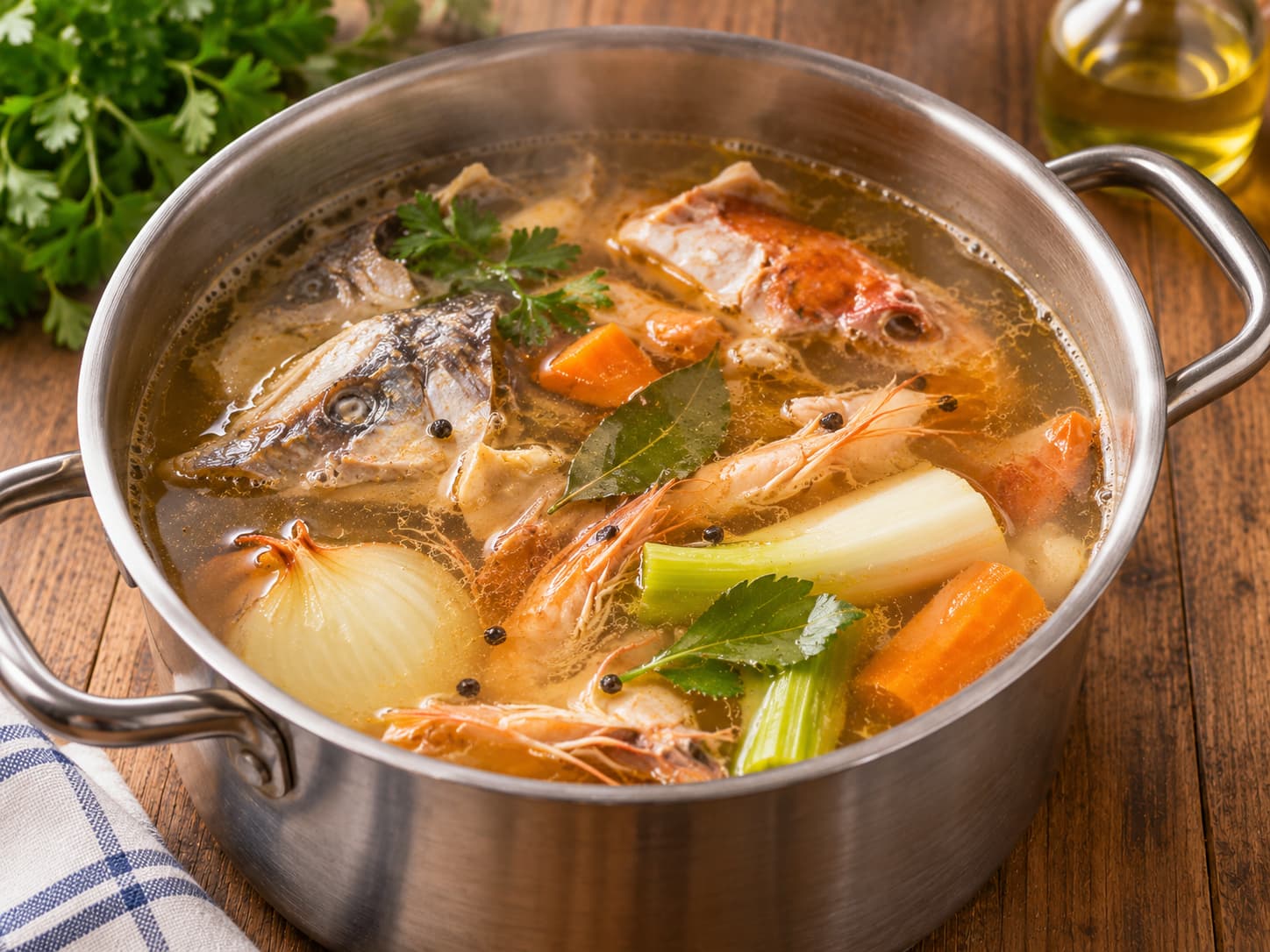
A good paella begins with good stock. For mixed paella, you can use stock combining meat and fish flavours, or make a predominantly seafood stock if you want the seafood to stand out. A simple option is to make stock with:
- Fish bones or heads.
- Shrimp heads.
- Vegetables such as leek, onion or carrot.
You can also use the flavours released by the chicken and seafood as they cook directly in the paella pan. The amount of stock mainly depends on the rice variety, pan diameter and heat intensity. As an initial guideline, use approximately 2.5 to 3 parts stock for each part rice, although this ratio must be adapted to the circumstances and rice variety, as explained in our article “How much water should I put in my paella?"
If you are unsure how to make fish fumet, we recommend reading our guide “How to make a good paella stock"
Essential spices and seasonings
You do not need many spices to make a good mixed paella. The essential seasonings are:
Saffron.
It adds aroma, flavour and a characteristic golden colour to the rice.
Sweet paprika.
It is normally added after the tomato or just before the liquid. Cook it for only a few seconds to prevent it from burning and becoming bitter.
Salt.
Adjust the salt before adding the rice, as it will be harder to correct later.
You can also use a small amount of rosemary for an extra aromatic note.
How to make mixed paella step by step
Once all the ingredients are ready, you can start cooking. Take your time and pay particular attention to the sofrito and heat control.
01Initial preparation: mise en place
Before turning on the heat, prepare every ingredient. Cut the chicken into fairly small, even-sized pieces to ensure uniform cooking. Clean and cut the squid or cuttlefish. Clean the mussels. Grate the tomato. Measure the rice and have the stock ready.
You can also prepare a small saffron infusion using hot water or stock. Organising everything in advance prevents interruptions while cooking.
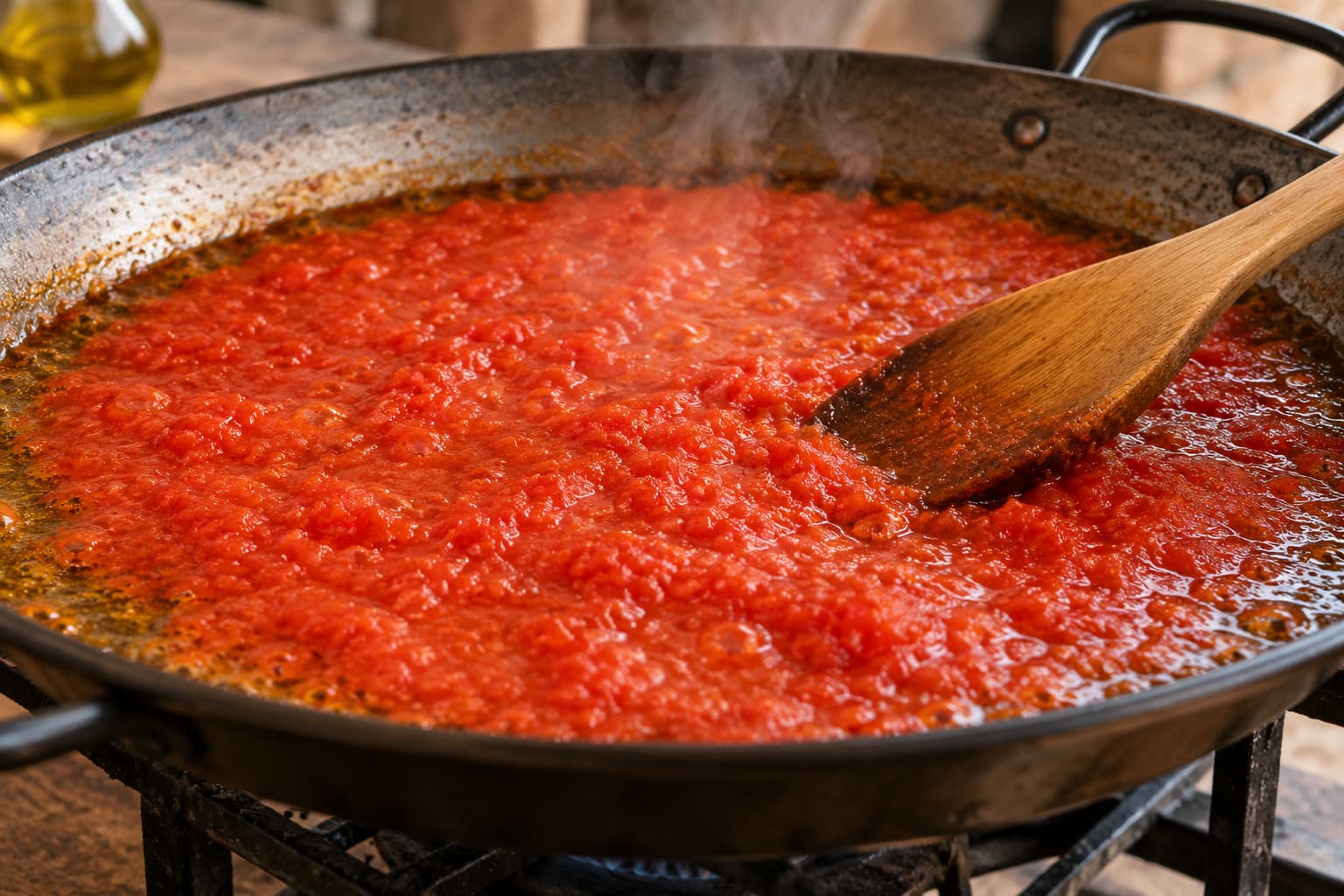
02The sofrito: the foundation of flavour
Add olive oil to the centre of the paella pan and heat over medium heat. Add the chicken and brown it slowly. This step is essential: do not merely cook the surface. Aim for a deep golden-brown colour, as caramelising the meat creates much of the rice's flavour.
When the chicken is properly browned, move it towards the edges. Add the shrimp or prawns and sear briefly on both sides; remove and set aside. Add the squid or cuttlefish and let some of its moisture evaporate. Add the green beans and sauté them.
Finally, add the grated tomato. Cook slowly until most of its water has evaporated and you have a concentrated sofrito. Add the sweet paprika, stir for a few seconds and immediately pour in the stock so that the paprika does not burn.
03Adding the stock and rice: times and proportions
After adding the stock, let it boil for a few minutes so that the flavours begin to combine. This is a good time to taste the stock and adjust the salt. Once the flavour is slightly pronounced, you can add the rice.
One traditional method is to pour the rice in a line from one side of the pan to the other and then carefully spread it across the surface. Once distributed, do not stir the rice again. Approximate cooking times:
- 7–8 minutes over medium-high heat.
- 8–10 minutes over medium or medium-low heat.
Times depend on the rice variety. During the last few minutes, return the shrimp or prawns and arrange the mussels. The mussels open thanks to the steam and heat from the rice. Ideally, the stock should disappear at roughly the same time as the rice reaches the correct doneness.
04The finishing touch: socarrat and resting
During the final moments, you can slightly increase the heat. A gentle crackling sound from the bottom indicates that the socarratis beginning to form. Socarrat is a thin layer of caramelised rice that develops against the pan, giving it a distinctive taste and texture.
Be careful, however: there is a fine line between creating socarrat and burning the rice. Usually, 30 seconds to 1 minute of slightly higher heat is enough. Then turn off the heat and let the paella rest for about 5 minutes before serving. During this time the rice settles and its moisture evens out.
Common mixed paella mistakes and how to avoid them
Although the recipe is not particularly difficult, some mistakes can significantly affect the result.
Using too many ingredients.
Combining too many meats, seafood items and vegetables can produce an unfocused flavour. Fewer, high-quality ingredients are better.
Not browning the meat enough.
The chicken should develop a rich colour before the remaining ingredients are added. Browning deepens the final flavour.
Stirring the rice while it cooks.
Once added and spread, leave the rice to cook without stirring.
Adding too much rice for the pan size. An overly thick layer makes even cooking more difficult. Using too much stock. If too much liquid remains at the end, you will have to extend cooking and may overcook the rice. Running out of stock too soon. If the liquid disappears while the grains are still hard, the heat was too high or there was not enough stock. Cooking all the seafood from the beginning. Some seafood, especially shrimp and prawns, can dry out if left in the pan throughout cooking.
Tips for making perfect mixed paella
Experience helps perfect any rice dish, but these tips can help you get good results from your first attempts.
Use the same rice variety consistently.
Once you know how it absorbs stock and how long it takes to cook, controlling the result becomes much easier.
Measure the rice and stock.
Cooking by eye works with plenty of experience, but measuring helps you reproduce good results.
Control the heat.
Paella needs more heat at the beginning and progressively less during the second half of cooking.
Use a sufficiently large paella pan.
A thin layer of rice is preferable to an overcrowded pan.
Prepare every ingredient before starting.
Good mise en place makes cooking much easier.
Do not rush the sofrito.
Much of a paella's final flavour develops in the first few minutes.
Let the rice rest before serving.
Five minutes can make a significant difference to the final texture.
Origins of mixed paella: where does it come from?
After making this recipe, you may wonder about its origins. Although there are references to mixed rice dishes in some Spanish coastal communities, where fishermen and farmers commonly exchanged produce, mixed paella did not become widely popular or appear regularly on restaurant menus until the twentieth century, particularly during the tourism boom of the 1960s and 1970s.
As tourism grew in Spain, restaurants in coastal and holiday destinations began offering foreign visitors new recipes. According to some accounts, guests themselves requested that fish and seafood be added to traditional paella or similar rice dishes.
The explanation usually given is that international tourists wanted to enjoy several flavours of Spanish cuisine in one dish; some may even have tried comparable rice recipes at home. Restaurants responded to this demand, and over time the dish now known as “mixed paella” emerged—or at least became enormously popular.
Ready to make your mixed paella?
Find paella pans, gas burners, accessories and ingredients at Original Paella.
Explore our shop